Quick answer
How often to change a furnace filter depends mostly on its thickness. In an Ohio home, replace a 1-inch pleated filter every one to three months and a 4- or 5-inch media filter every six to twelve months. Pets, remodeling dust, allergies and long heating or cooling seasons shorten that schedule, so check monthly.
A straight answer on furnace filter changes in Ohio: 1-inch versus 4-inch media, which MERV rating makes sense, and when pets, remodeling or cottonwood season should speed up your schedule.
Short answer: in a typical Ohio home, change a 1-inch filter every 1–3 months and a 4- or 5-inch media filter every 6–12 months. Change more often with pets, a remodel, heavy allergy season or a system that runs nonstop. The best schedule is the one based on how dirty your filter actually gets, so check it monthly until you learn your home's pattern.
Filter Thickness Changes Everything
The single biggest factor is not the brand on the package. It is how deep the filter is. A 1-inch filter has very little surface area, so it loads up quickly and restricts airflow as it does. A 4- or 5-inch media filter packs far more pleated material into the same opening, which means it holds more dust and adds less resistance.
| Filter type | Normal household | Pets, allergies or remodeling |
|---|---|---|
| 1-inch fiberglass | Every month | Every 2–3 weeks |
| 1-inch pleated | Every 1–3 months | Every month |
| 2-inch pleated | Every 2–3 months | Every 1–2 months |
| 4–5-inch media | Every 6–12 months | Every 3–6 months |
These are starting points. A tight, newer house with one person and no pets may stretch toward the long end. An older home with a dog, a basement workshop and kids tracking in dirt will not.
MERV Ratings: Higher Is Not Always Better
MERV ratings describe how well a filter captures particles of different sizes. Higher numbers catch finer particles, but they also resist airflow more, especially in a 1-inch format.
- MERV 8: solid everyday choice for most 1-inch slots. Catches dust, lint and pollen without choking the blower.
- MERV 11: better for allergy households and a good fit in 2-inch or deeper cabinets.
- MERV 13: fine particle capture, including some smoke and bacteria-sized particles. Best in a 4- or 5-inch media cabinet designed for it.
Why static pressure matters
Every furnace blower is rated to push air against a limited amount of resistance, measured as total external static pressure. Jam a MERV 13 1-inch filter into a system with undersized return ductwork, which is common in Dayton-area homes from the 1950s and 1960s, and static pressure can climb past what the blower is built for. The results are noisy registers, an iced AC coil in summer, overheating and limit-switch trips in winter, and a variable-speed blower working harder than it should.
Ohio Seasons and Your Filter Schedule
Our climate puts different loads on your filter throughout the year. Here is how we suggest thinking about it in the Miami Valley.
- Early spring (March–April): tree pollen arrives. Put in a fresh filter before switching over to cooling.
- Late spring (late May–June): cottonwood fluff and grass pollen peak. Check filters every few weeks, and look at the outdoor AC coil too.
- Summer (July–August): long AC run times pull a lot of air through the filter. Check monthly.
- Fall (September–October): ragweed season and the start of heating. Change the filter before or during your furnace tune-up.
- Winter (December–February): heavy furnace run times and closed windows. Check monthly, and more often if you burn a wood fireplace.
When to Change It Sooner
- Pets: shedding dogs and cats can gray out a 1-inch filter in a few weeks.
- Renovation: drywall sanding and sawdust clog filters in days. Cover returns during demolition and change the filter as soon as the dust settles.
- Allergies or asthma: fresh media keeps capture efficiency where it should be.
- New construction dust: the first months in a new build shed a surprising amount of debris into the ducts.
- Smoke events: wildfire smoke drifting down from Canada has reached Ohio in recent summers; a fresh higher-MERV filter helps.
How to tell a filter is due, and how to buy the right size
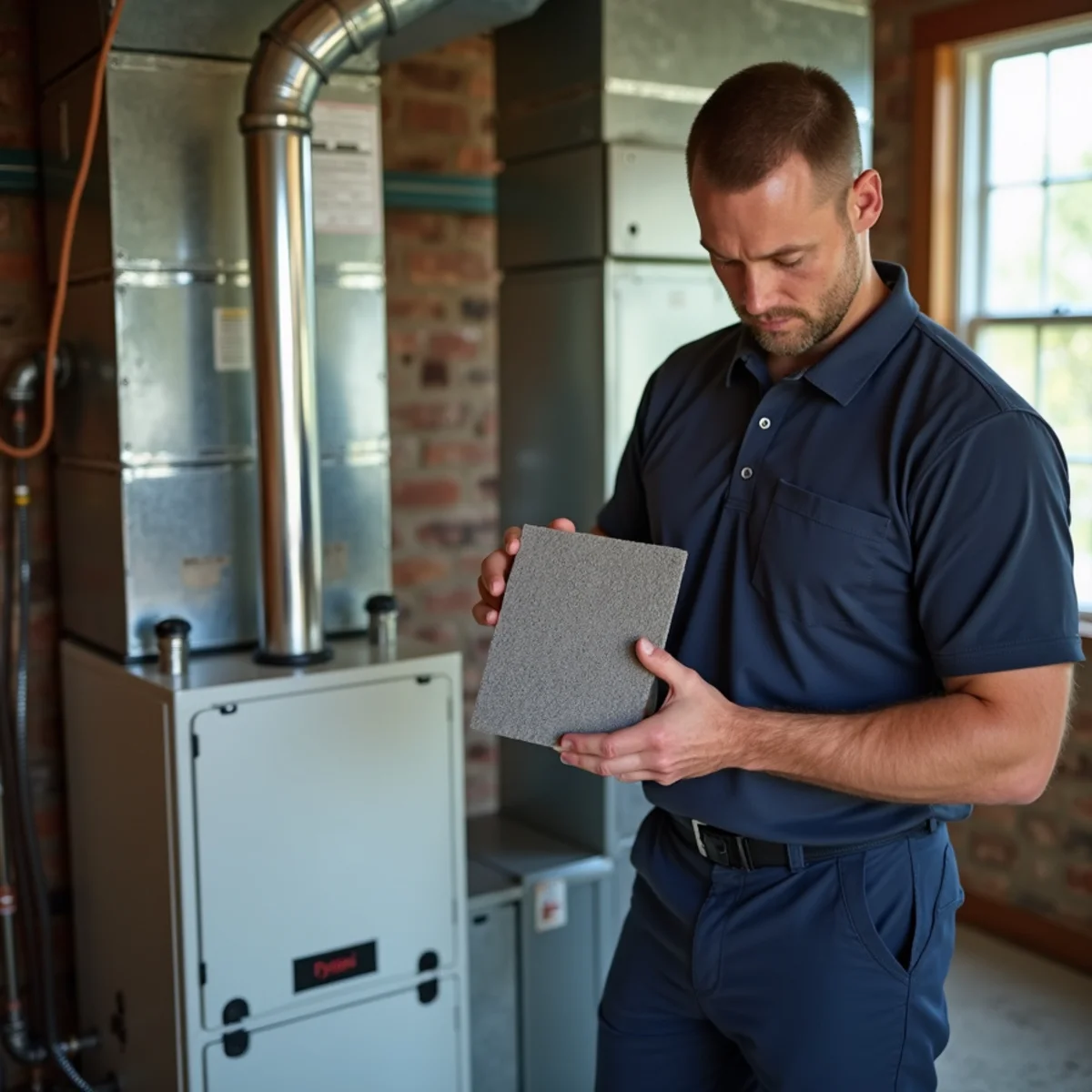
- The light test: hold the filter up to a window or flashlight. If you can barely see light through the pleats, it is done, no matter what the calendar says.
- Color is misleading: a gray filter is doing its job. What matters is whether the pleats are packed and the face feels matted or crusted.
- Read the frame: the size printed on the cardboard edge is a nominal size, such as 16x25x1. The actual measurement runs slightly smaller, so buy by the printed number, not your tape measure.
- Find every slot: some homes have a filter at the furnace plus one or more return grilles with their own filters. Only one filtering point should be used, and doubled-up filters are a hidden airflow restriction.
- Write the date on it: a marker note on the frame ends the guessing game the next time you check.
When a Filter Alone Isn't Enough
If filters load up fast and you still see dust on furniture, the problem may be leaky return ducts pulling in attic or crawlspace air, or debris already built up in the ductwork. We can check static pressure, look at your return layout and recommend a media cabinet, UV purifier or other indoor air quality improvements. When ducts are genuinely dirty, air duct cleaning can help, and we will tell you honestly when it will not.
Our technicians work in homes across Trotwood, West Carrollton and the rest of the Dayton area. Give our office a call if you want help picking the right filter or upgrading to a media cabinet that fits your system.
Furnace Filter Guide: Finding the Slot, Choosing a Type and Avoiding Common Mistakes
Knowing the replacement interval only helps if you can find the filter, buy the right one and install it correctly. These are the questions homeowners ask our technicians at the furnace, answered in the order they come up.
Where the filter lives in different Ohio homes
- Basement upflow furnace: the most common setup around Dayton. Look for a slot with a removable cover where the large return duct meets the side or bottom of the cabinet, or a door on a separate filter rack.
- Media cabinet: a boxy housing, several inches deep, bolted between the return duct and the furnace. It opens with a hinged or slide-off door and holds a 4- or 5-inch filter.
- Hall closet or utility room furnace: common in slab homes and condos. The filter is often behind a louvered grille in the wall or ceiling near the unit.
- Attic or crawlspace air handler: found in some newer two-story homes and heat pump installs. The filter is usually at a ceiling return grille downstairs so you never have to climb into the attic.
- Multiple return grilles with filters: each grille holds its own thin filter. In that case the furnace slot itself should be empty or hold a single filter, never both at full restriction.
Changing a filter step by step
- Turn the thermostat to off so the blower stays quiet.
- Open the slot or grille and slide the old filter out slowly, keeping the dirty face up so dust does not fall into the duct.
- Read the nominal size and MERV rating printed on the frame, and note the airflow arrow direction.
- Vacuum any loose dust at the slot opening.
- Slide the new filter in with the arrow pointing toward the blower, and make sure it seats fully with no gap along the edges.
- Replace the slot cover; an open slot pulls unfiltered basement air straight into the system.
- Write the date on the frame and turn the system back on.
Filter types compared
MERV numbers come from ASHRAE Standard 52.2, the industry test that rates filters from 1 to 16 by how well they capture particles in several size ranges. The EPA suggests using a MERV 13 filter or the highest rating your system can handle when you are trying to reduce fine particles indoors. The key phrase is the one your system can handle.
| Type | Typical MERV | Best fit | Watch out for |
|---|---|---|---|
| 1-inch fiberglass | 1–4 | Protecting the blower only | Almost no help with allergens |
| 1-inch pleated | 6–11 | Most standard furnace slots | Higher ratings restrict small returns |
| 1-inch electrostatic washable | Usually low | Homeowners who dislike buying disposables | Mold if reinstalled damp |
| 4- to 5-inch media | 8–13 | Media cabinets on most systems | Must match the cabinet brand and size |
| Bypass HEPA system | Beyond the MERV scale | Severe allergies or medical needs | Needs its own fan and professional install |
Mistakes we find at the filter slot
- Buying the right size in the wrong depth, such as a 1-inch filter rattling inside a 4-inch cabinet.
- Leaving the plastic wrap on a new filter.
- Cutting or folding a filter to force it into a slot that is too small.
- Taping cardboard or foil over the slot after losing the original cover.
- Running the system for weeks with no filter while waiting to buy one, which lets dust coat the coil above it.
- Changing the filter only when the furnace acts up, instead of on a schedule.
Miami Valley habits that keep the schedule honest
Tie the filter check to something you already do: the first of each month, the day you pay the gas bill, or the start of each school quarter. Buy a season’s worth at once so a replacement is always on the shelf. Around cottonwood week in June, and again when the ragweed season peaks in late summer, pull the filter even if the calendar says it has time left.
If a clean filter still leaves the house dusty or stuffy, the answer may be humidity control or better filtration hardware rather than more frequent changes. Our guide to indoor air quality in humid Miami Valley homes covers that side, and a seasonal maintenance visit includes a filter check, a static pressure reading and a look at the return side of the ductwork. Homeowners in Huber Heights, where plenty of homes keep the furnace in a hall closet and the filter behind a wall grille, often ask us to show them the slot during the first visit.
From our technicians
What we find in filter slots on service calls
A surprising share of no-heat and frozen-coil calls we run end at the filter slot. We pull out filters that have bowed into the blower compartment, filters installed with the arrow backward, and slots with two filters stacked together because the homeowner did not realize the old one was still in there. Each of those turns a cheap part into a service call.
Another common one is a filter that fits badly. A 1-inch filter in a slot built for a thicker one, or a gap along the edge of the rack, lets air skip the media entirely. The filter looks clean month after month, and the homeowner assumes it is working, while dust quietly coats the evaporator coil and blower wheel. When a filter never seems to get dirty, we look for bypass.
The honest tradeoff with filtration is airflow. We like 4- or 5-inch media cabinets because they give better capture and longer change intervals without squeezing the blower. But on an older ranch with one small central return, the fix may be adding return air before upgrading the filter. We measure static pressure with and without the filter in place so the recommendation is based on numbers, not on what is on the shelf at the hardware store.
Want a technician to take a look?
Comfort Air Solutions serves Miamisburg, Dayton and the Miami Valley — 24/7 emergency service.
- 4.8★ · 32 Google reviews
- 25+ years’ experience
- Written options before work
- Factory-Authorized Bryant® Dealer