Quick answer
Heat pump repair in Miamisburg, OH most often means fixing a defrost control, a sticking reversing valve, a refrigerant leak or backup heat that runs when it should not. Comfort Air Solutions services every brand, tests the system in both heating and cooling modes, and quotes the repair in writing before any work starts.
A heat pump moves heat instead of making it, pulling warmth out of outdoor air in winter and reversing the flow to cool in summer. That makes it efficient, but it also means the system depends on a few extra parts a furnace does not have: a reversing valve, a defrost control, outdoor sensors and a backup heat strip or furnace. Good heat pump repair in Miamisburg starts with knowing how all of those pieces hand off to each other.
Comfort Air Solutions repairs air-source heat pumps, dual-fuel systems and ductless mini-split heat pumps of every make. Our technicians understand how these systems behave in Southwest Ohio winters, where temperatures regularly dip below the point where a heat pump alone can keep up.
Common heat pump problems
Outdoor coil stays caked in ice
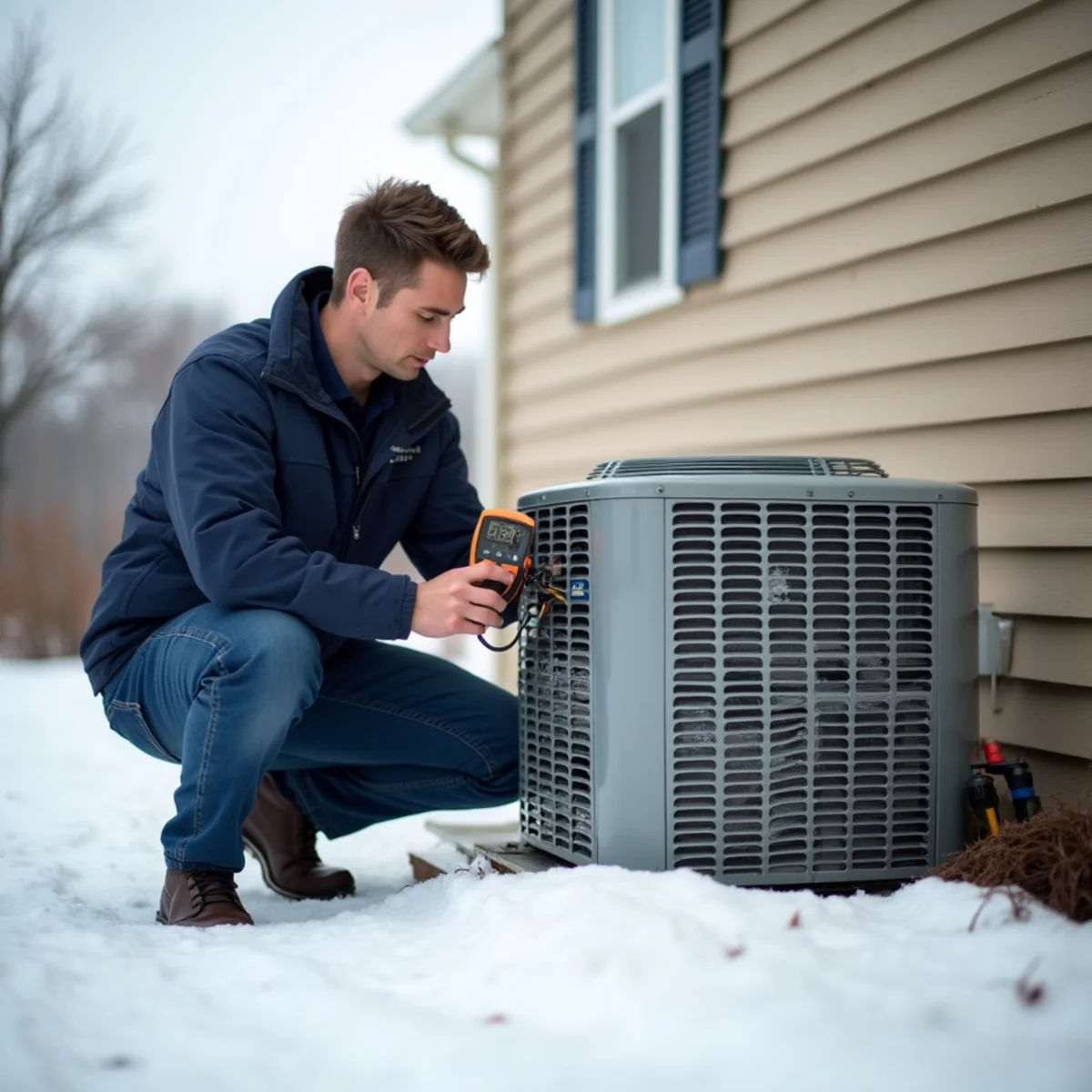
Light frost is normal. A solid block of ice that never clears means the defrost board, defrost sensor or outdoor thermostat is not initiating a defrost cycle.
Aux or emergency heat running nonstop
The heat pump is not carrying its share, from low refrigerant, a stuck reversing valve or a thermostat configuration problem, so electric strips are doing all the work.
Blowing cool air in heating mode
Often a reversing valve stuck in cooling position or a failed solenoid coil on the valve.
Loud whoosh and steam from the outdoor unit
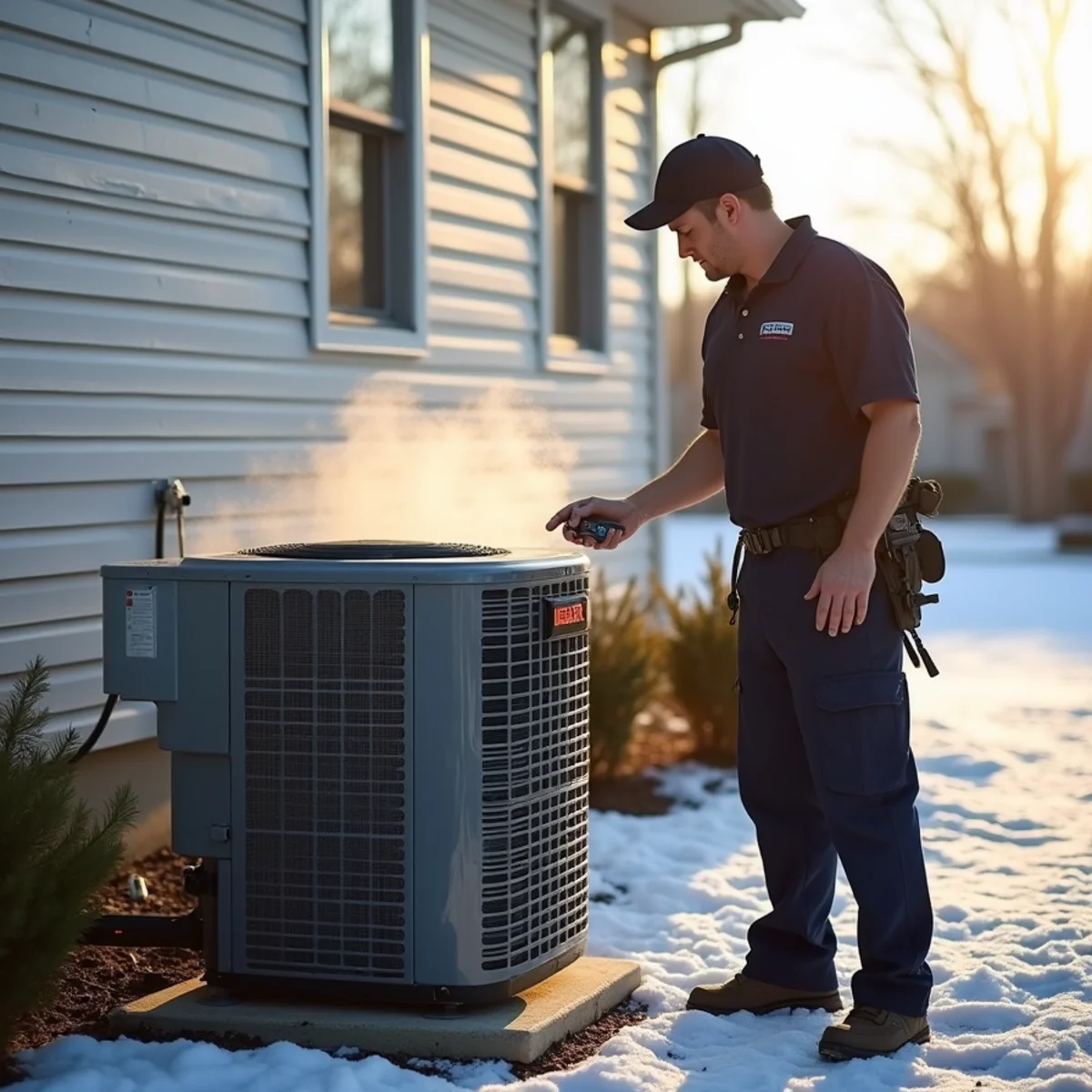
That is usually a normal defrost cycle. If it happens every few minutes, a sensor may be misreading coil temperature.
Higher-than-usual winter electric bills
Backup heat strips use far more electricity than the heat pump itself. A jump in usage often points to one of the problems above.
Outdoor fan not spinning
A failed fan motor or capacitor prevents heat exchange and can trip the compressor on high pressure.
Seeing one of these signs?
Call now — we dispatch fast and give you written options before any work.
What our heat pump repair visit covers
A heat pump has two jobs, so we check it doing both before we sign off.
Thermostat wiring and configuration review
System type, O/B reversing terminal, aux heat staging and lockout temperatures, which cause more misdiagnosed calls than any single part.
Reversing valve shift test
We switch between heating and cooling and watch pressures and line temperatures to confirm the valve moves fully.
Forced defrost cycle
The defrost board, coil sensor and outdoor fan are made to run a defrost on command so we see the coil actually clear.
Refrigerant readings in heating mode
Pressures and temperatures checked against the manufacturer’s heating charts, since a charge that looks fine in summer can be off in winter.
Backup heat amp draw
Each electric strip or the dual-fuel furnace side is tested so backup heat works when you need it and stays off when you do not.
Outdoor unit placement check
Pad level, riser height, drainage and clearance are noted, with simple fixes suggested when ice keeps coming back.
How we diagnose and repair heat pumps
- 1
Confirm thermostat setup
Many heat pump complaints trace back to a thermostat set for the wrong system type, or balance point and aux heat lockout settings that were never configured.
- 2
Check both modes of operation
We run the system in heating and cooling to verify the reversing valve shifts cleanly and pressures respond as they should.
- 3
Test defrost controls
We check the defrost board, coil sensor and timing, then force a defrost cycle to confirm the outdoor coil clears.
- 4
Measure refrigerant performance
Heat pumps are sensitive to charge. EPA 608-certified techs read pressures and temperatures in both modes to find leaks or restrictions.
- 5
Explain options and repair
You get a clear explanation and price before work begins. After the repair, we set the balance point and backup heat staging so the system runs efficiently.
What affects heat pump repair cost
Heat pump repairs range from a thermostat adjustment to a major component. Here is what shapes the price.
- Component involved
- A defrost sensor is a small part. A reversing valve replacement requires recovering refrigerant, brazing and recharging.
- System configuration
- Dual-fuel systems with a gas furnace, electric-strip systems and ductless units each have different controls.
- Refrigerant work
- Leak searches, repairs and recharges add time, and the refrigerant type matters.
- Equipment age and parts availability
- Older or discontinued models may need a universal or special-order part.
- Timing of the call
- A no-heat heat pump in January may be an after-hours emergency, which affects labor.
Balance point and backup heat in Ohio winters
Every heat pump has a balance point, the outdoor temperature where its output equals the home's heat loss. Below that temperature, backup heat must fill the gap. In a typical Miami Valley home with a standard heat pump, that point often falls somewhere around freezing, which means backup heat runs regularly from December through February.
Emergency heat is different from auxiliary heat. Aux heat supplements the heat pump automatically. Emergency heat shuts the heat pump off entirely and runs only the backup source. Use emergency heat only when the outdoor unit is damaged or iced solid, and call us, because running on strips alone can be expensive.
Dual-fuel systems
Many Dayton-area homes pair a heat pump with a gas furnace. The heat pump handles mild days, and the furnace takes over below a set outdoor temperature. When the changeover setting is wrong, or the outdoor sensor fails, the system may burn gas on a 45-degree day or struggle with the heat pump at 10 degrees. We calibrate that changeover and inspect the furnace side, including carbon monoxide safety checks.
Repair or replace an aging heat pump
Heat pumps run year-round, so they accumulate hours faster than an air conditioner. If yours is older, uses R-22, or needs a compressor, it may be time to compare repair costs against a full HVAC system replacement with a modern cold-climate model. Our article comparing a heat pump and a gas furnace for Ohio covers the tradeoffs. We service heat pumps across Centerville and Washington Township and the rest of the Miami Valley.
Where the outdoor unit sits matters in winter
Some of the heat pump calls we run in January have nothing to do with a failed part. The unit was simply installed where water and snow work against it. A furnace in the basement never has to deal with that, so it is easy to overlook.
- Roof drip. A unit under a gutterless eave or an overflowing downspout gets glazed with ice that no defrost cycle can clear.
- No riser. Units set flat on a pad can freeze into their own meltwater. A stand a few inches tall lets defrost water drain away.
- Drifting snow. Keep a foot or so of clearance around the coil and a clear path above the fan.
- Tight corners. A unit boxed in by shrubs or fencing recirculates its own cold discharge air and works harder than it should.
Heat pump troubleshooting in depth: reversing valves, defrost logic and backup heat
A heat pump is an air conditioner that can run its refrigerant backward, which is why it can fail in more ways than either a furnace or a cooling-only system. The guide below goes past the symptom list above and into what a technician measures, what normal heating-mode behavior actually feels like, and where homeowners accidentally make a healthy heat pump look broken.
Fault by fault: heat pump failures and how we confirm them
| Symptom | Likely cause | What we test | Typical fix |
|---|---|---|---|
| Cool air in heat mode, outdoor unit running | Reversing valve not shifting | Voltage at the valve solenoid, line temperatures on each side of the valve | Replace the solenoid coil, or the valve with recovery and brazing |
| Coil iced solid, never clears | Defrost sensor or board failure | Sensor resistance against its temperature chart, board test mode | Replace sensor or board, then force a defrost |
| Ice only on the bottom rows of the coil | Low refrigerant charge | Heating-mode pressures against the maker's charts, leak search | Repair the leak, weigh in the correct charge |
| House warm but electric use soaring | Backup strips running when they should not | Amp draw on each strip, sequencer or relay, thermostat lockout settings | Correct staging, replace a stuck relay |
| Outdoor fan keeps running during defrost | Defrost relay or board fault | Fan circuit during a forced defrost | Board repair or replacement |
| Strong heat in summer mode, cooling fine in winter | Thermostat wired for the wrong changeover terminal | O or B setting against the equipment brand | Reconfigure the thermostat |
What normal heating actually feels like
Put your hand at a register while a heat pump is heating and the air will feel lukewarm compared with a gas furnace. Supply air from a heat pump commonly lands somewhere in the 80s or 90s, which is warmer than the room but cooler than your skin, so it can feel like a draft. A furnace blows noticeably hotter air in shorter bursts. Heat pumps are designed to run longer, gentler cycles.
The real test is whether the house reaches the thermostat setting and holds it. If the indoor temperature keeps climbing to setpoint and the system then cycles off, the heat pump is working. If the house falls steadily behind on a moderate day, or air stays cold for long stretches outside of a defrost cycle, that is a service call.
Standard, cold-climate and dual-fuel: how they differ in repair
- Standard single-stage heat pumps run at full output or not at all. They are simpler to troubleshoot but lean on backup heat sooner as temperatures fall.
- Variable-speed inverter models adjust compressor speed continuously and are rated with HSPF2 for heating efficiency. Their electronics add diagnostic codes and communicating controls, and some faults need brand-specific software or parts.
- Cold-climate heat pumps keep more of their capacity in deep cold, so backup heat engages less often. When one does call for backup early, that is a bigger red flag than on a standard unit.
- Dual-fuel systems hand off to a gas furnace below a set outdoor temperature. Repairs can involve the outdoor sensor, the thermostat logic and the furnace itself, which we cover in our comparison of heat pumps and gas furnaces for Ohio homes.
- Ductless heat pumps use the same refrigerant principles with board-driven error codes in each indoor head; our ductless mini-split service page covers those systems.
Mistakes that make a good heat pump look broken
- Deep overnight setbacks. Raising the thermostat several degrees at once in the morning can bring on the electric strips to close the gap. Small setbacks, or a thermostat with heat pump recovery logic, avoid that.
- Replacing the thermostat with one that is not configured for a heat pump. The wrong changeover terminal flips heating and cooling.
- Leaving the system on emergency heat after a problem clears, and discovering it on the next electric bill.
- Chipping or prying ice off the outdoor coil. The fins and tubing are easy to puncture, and a refrigerant leak turns a defrost problem into a much bigger repair.
- Skipping the fall visit. A heat pump works in both seasons, so it benefits from a check before winter as much as a furnace does; our fall tune-up guide for Ohio homes explains what that visit covers.
Why choose Comfort Air Solutions for heat pump repair
Year-round equipment, year-round coverage
Heat pumps fail in both seasons, and our 24/7 emergency line covers a dead heat pump in February as readily as a no-cool call in August.
Dual-fuel knowledge on both sides
We work on heat pumps and gas furnaces daily, including combustion analysis on the furnace half of a dual-fuel system.
Every brand, Bryant® included
As a factory-authorized Bryant® dealer we know current inverter and variable-speed heat pumps, and we repair every other make too.
Maintenance that fits a two-season machine
Comfort Air Fan Club spring and fall visits line up with the switch between cooling and heating, with priority service if something fails between them.
Heat Pump Repair near Miamisburg
Heat pumps and dual-fuel systems are most common in the all-electric and newer subdivisions around Springboro, Huber Heights and Beavercreek, and in rural homes without natural gas out toward Germantown. Ductless heat pumps are turning up more in older Oakwood houses without ductwork. Our Miamisburg technicians service all of them in both heating and cooling season.
We provide heat pump repair from our Miamisburg shop throughout the southern Dayton suburbs, including:
- West Carrollton, OH
- Moraine, OH
- Springboro, OH
- Germantown, OH
- Kettering, OH
- Centerville, OH
- Dayton, OH
- Franklin, OH
- Carlisle, OH