Quick answer
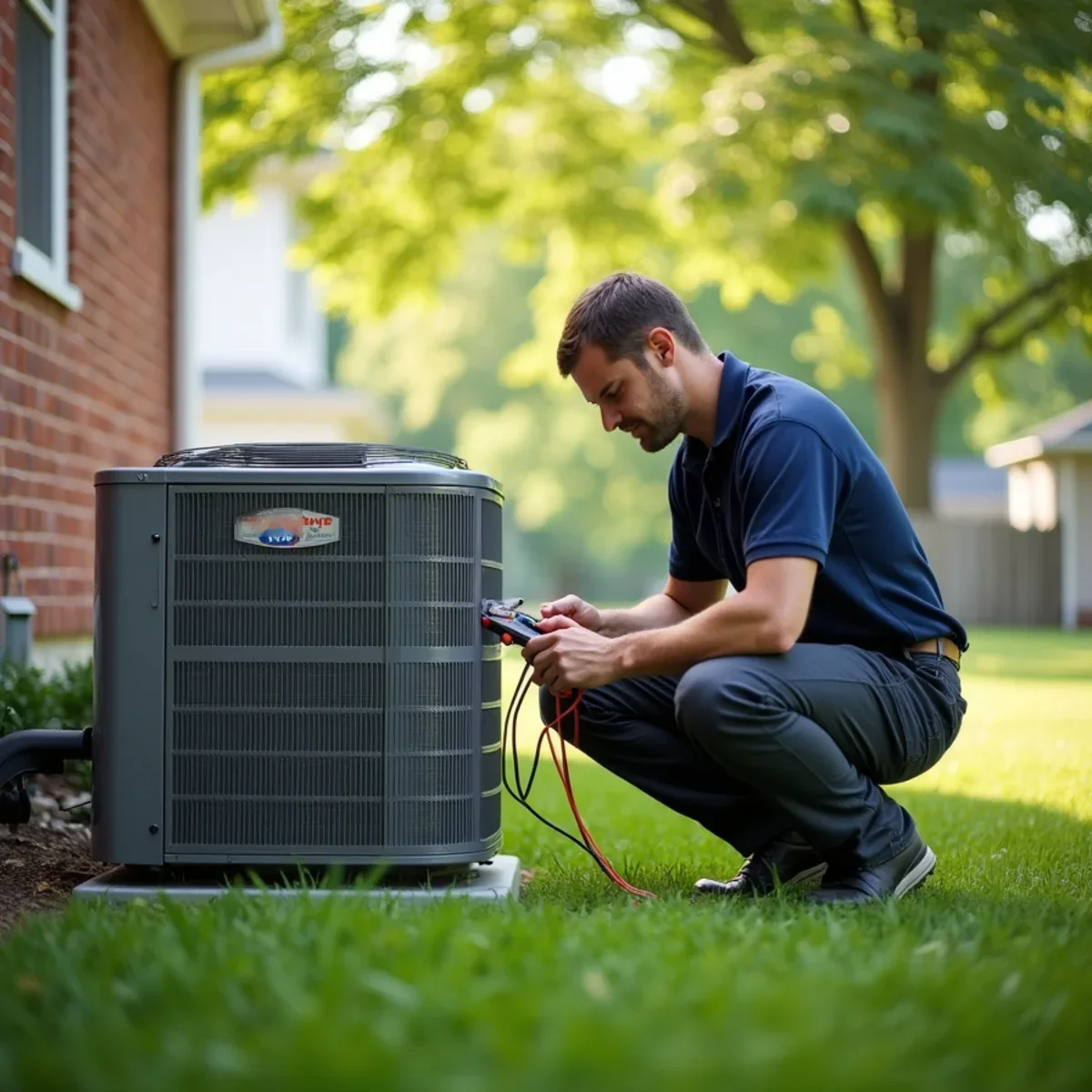
Emergency AC repair in Miamisburg, OH usually comes down to a capacitor, contactor, frozen coil or clogged condensate drain, and our trucks carry the parts to fix those the same day. Comfort Air Solutions takes no-cooling calls around the clock in summer, gives you the repair price before any work, and prioritizes homes with infants, older adults or medical needs.
Miami Valley summers pair high heat with heavy humidity, and air conditioners fail most often during exactly the stretch of days when you need them. The outdoor unit has been running nearly nonstop, a weak part finally gives out, and by evening the upstairs is too warm to sleep in. That is when emergency AC repair in Miamisburg stops being optional.
Our emergency AC team focuses on getting cooling back the same day. Most heat-wave failures come down to a handful of parts, including run capacitors, contactors, condenser fan motors and condensate float switches, and those ride on every Comfort Air Solutions truck. For planned upgrades or new equipment, see our air conditioning repair and installation page.
Heat-wave AC failures we fix most often
Outdoor unit hums but the fan does not spin
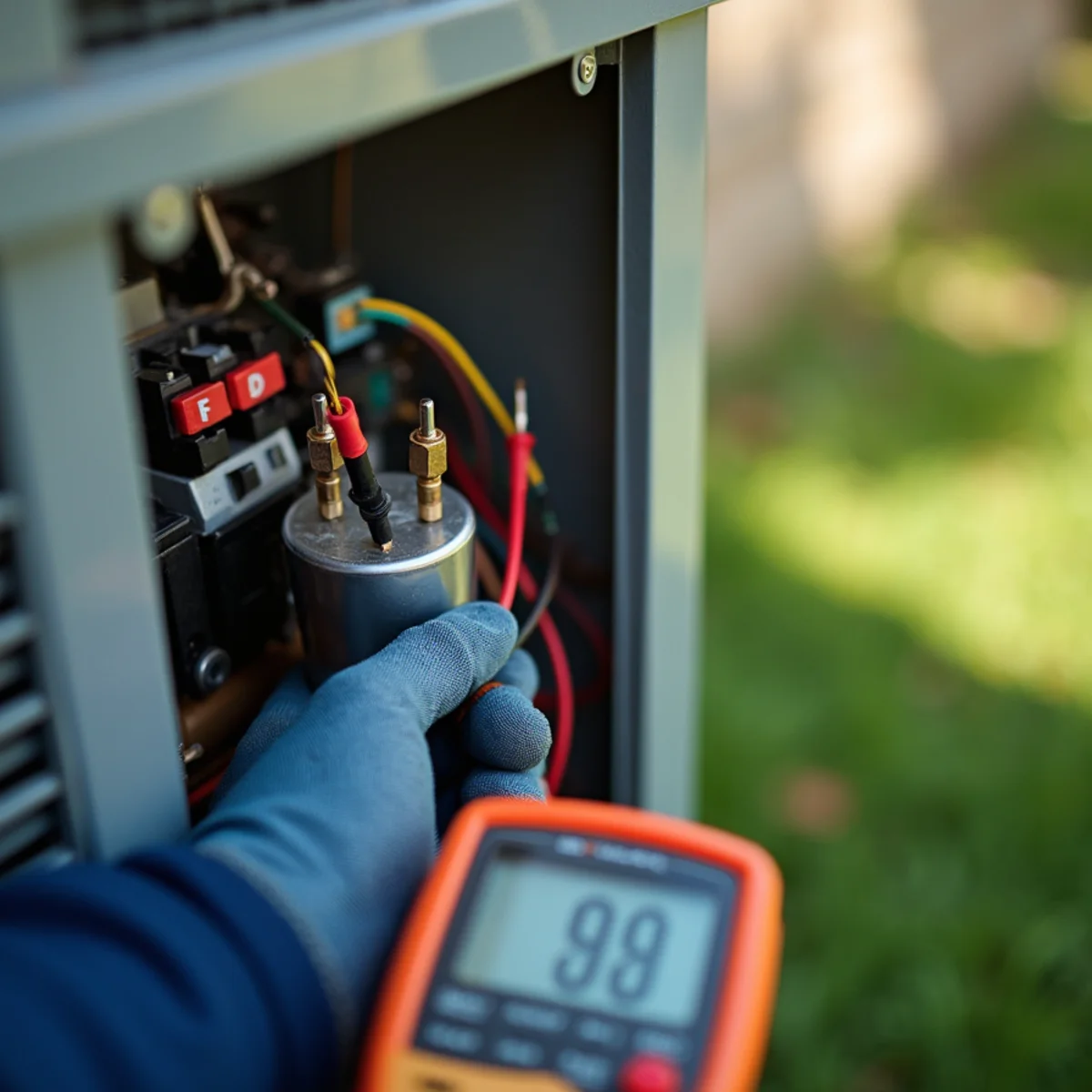
A failed run capacitor is the classic cause. The compressor or fan motor cannot start without it and will overheat trying.
Indoor fan runs, outdoor unit is silent
Often a burned or pitted contactor, a tripped disconnect, or a blown fuse at the outdoor unit.
Ice on the copper line or indoor coil
A frozen evaporator coil blocks airflow and stops cooling. Dirty filters, low refrigerant and weak blowers all cause it.
System shut off with water in the drain pan
The condensate float switch did its job. The drain line is clogged with algae, and the switch cut power to prevent an overflow.
Running constantly, air barely cool
Low refrigerant from a leak, a dirty outdoor coil packed with cottonwood fluff, or a compressor that is losing efficiency.
Breaker trips when the AC starts
A shorted compressor, a failing capacitor or wiring damage. Leave the breaker off after one reset.
Seeing one of these signs?
Call now — we dispatch fast and give you written options before any work.
What a no-cooling emergency visit includes
Before the technician packs up, your system has been checked on both sides of the refrigerant circuit.
Capacitor tested against its rating
Microfarad readings on the run capacitor, plus a look for swelling or leaking oil, since a weak one takes the compressor down with it.
Contactor, disconnect and wiring inspection
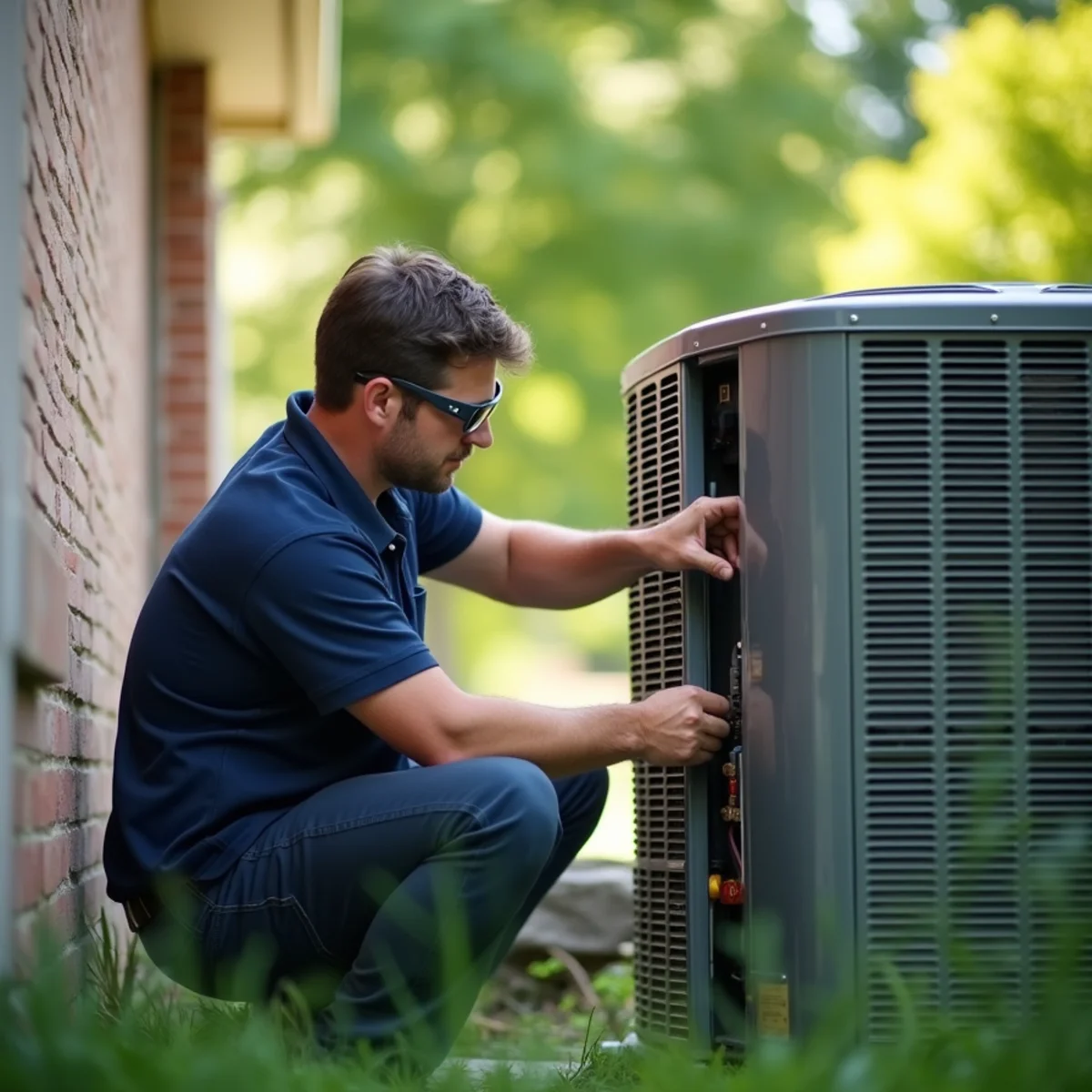
Pitted contacts, heat-browned wires and blown fuses at the outdoor unit are found and fixed while we are there.
Superheat and subcooling readings
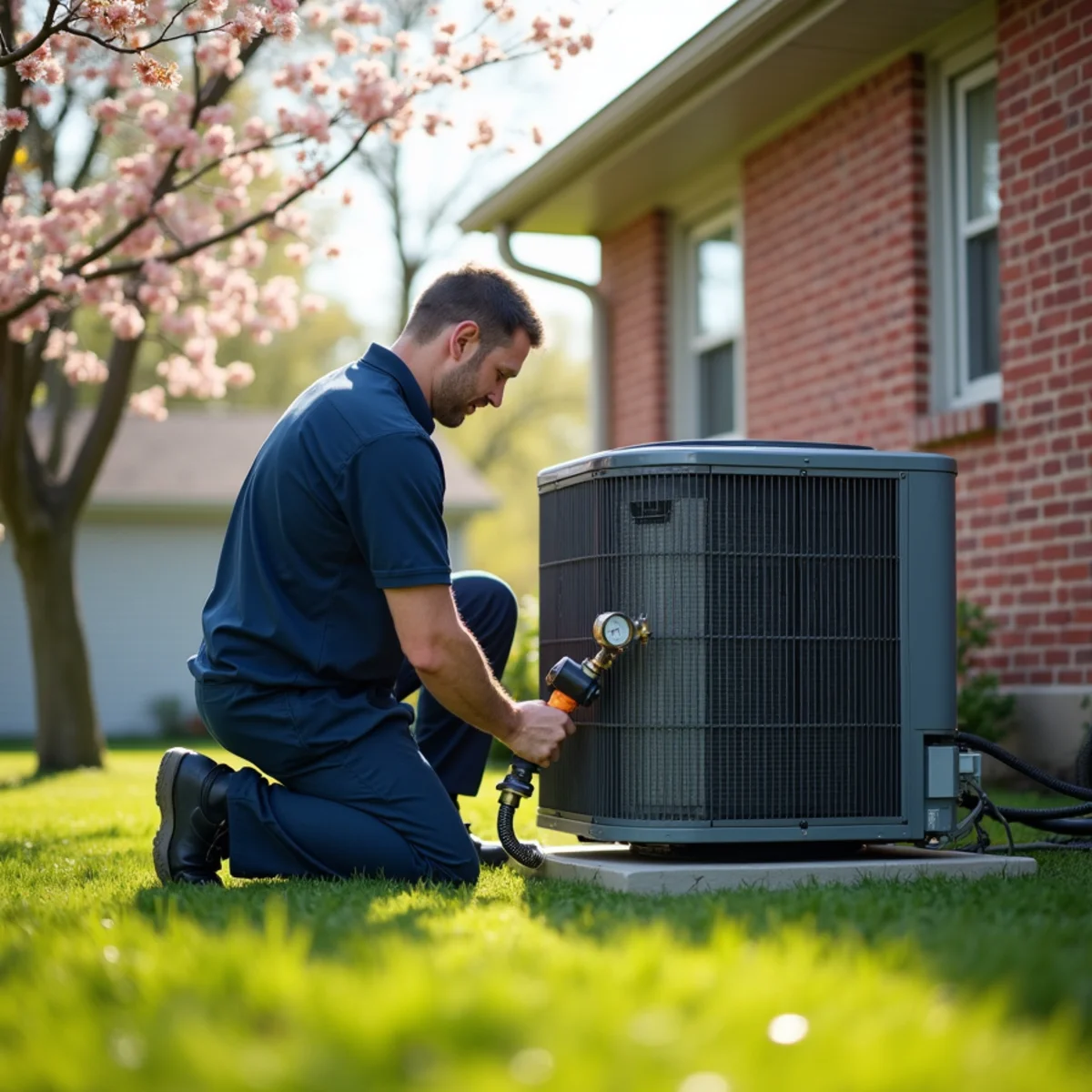
Gauges and probes show whether the refrigerant charge is right, handled by EPA Section 608-certified technicians.
Condensate drain cleared and float switch tested
Algae plugs are flushed and the safety switch is checked so the system does not shut off again tomorrow.
Condenser coil and fan check
Cottonwood, grass clippings and a slowing fan motor are the quiet reasons a condenser overheats on a hot afternoon.
Measured temperature drop before we leave
Supply and return temperatures are recorded so you know cooling is truly back, not just running.
Our emergency AC repair process
- 1
Phone guidance while we are en route
We will ask you to turn the system off if the coil is frozen, which lets ice start melting before the tech arrives.
- 2
Electrical testing at the condenser
We check line voltage, test the capacitor against its microfarad rating, and inspect the contactor points for pitting.
- 3
Refrigerant and airflow diagnosis
Gauges and temperature probes show superheat and subcooling, which tell us whether the charge is right or a leak exists. Our techs hold EPA Section 608 certification.
- 4
Approve the repair
You hear what failed and what it costs before any work starts. If the compressor is failing on an older system, we lay out repair and replacement choices side by side.
- 5
Repair, clear drains, confirm cooling
We replace the part, flush the condensate line if needed, and measure temperature drop across the coil before we leave.
What determines the cost of emergency AC repair
We diagnose first and give you the price before we fix anything. These are the factors that change it.
- Which component failed
- A capacitor or contactor is a modest repair. A compressor or coil replacement is a major one.
- Refrigerant type and amount
- Older systems using R-22 face limited supply, and newer refrigerants have their own handling requirements.
- Leak location
- A leak at an accessible service valve is simpler than one inside the evaporator coil.
- Time of the call
- Evening, weekend and holiday service during a heat wave involves after-hours labor.
- Equipment access
- Attic air handlers and condensers boxed in by landscaping take longer to service safely.
Heat illness risk for older adults, infants and pets
A house without air conditioning during a heat advisory is a health issue, not just a comfort one. Older adults, infants, people on certain medications and anyone with heart or lung disease are more vulnerable to heat exhaustion and heat stroke. Dogs and cats, especially older or short-nosed breeds, can overheat in closed rooms.
- Move vulnerable family members and pets to the lowest, shadiest room or basement.
- Close blinds on sun-facing windows and keep everyone drinking water.
- Use fans to move air, but know they stop helping once the room is very hot.
- If someone feels confused, stops sweating or faints, call 911.
- Consider spending the afternoon with family, a library or a cooling center until the AC is running again.
What to do with a frozen AC coil
If you see ice on the refrigerant line at the outdoor unit or frost on the indoor coil, turn the thermostat to off and set the fan to on. That moves warm air across the coil and speeds thawing. Do not chip at the ice. Coils are thin aluminum and puncture easily.
Check your filter while it thaws. If it is clogged, replace it. If ice returns after a clean filter and a full thaw, the system likely has low refrigerant or a blower problem that needs a technician.
After storms and surges
Summer thunderstorms across the Miami Valley often take out capacitors and control boards with a power surge, or bury condensers under hail and debris. Our storm and surge damage HVAC repair page covers what to check after severe weather. We run emergency AC calls throughout Kettering and the south Dayton suburbs, and a spring AC tune-up checklist helps you catch weak parts before the first heat wave.
Broken, or just outmatched by a heat wave?
Residential air conditioners in southwest Ohio are sized for typical summer peaks, not for a string of 95-degree days with dew points in the 70s. On those afternoons a healthy system may run all day and hold the house in the upper 70s. That is frustrating, but it is not a breakdown.
One quick clue: put a kitchen thermometer in a supply register and another near the return grille after the system has run for 15 minutes. A healthy system usually shows a drop somewhere around 15 to 20 degrees. A much smaller split, warm air, or ice anywhere on the lines means something has failed, and that is worth a same-day call.
No-cooling diagnostics: tracing a dead or weak air conditioner
The furnace emergency page is about ignition and draft. A failed air conditioner is a different animal: an electrical circuit that starts two motors under heavy load, plus a sealed refrigerant loop that has to move heat out of the house. Here is how a technician separates those two halves on a July call, and why the order of the tests matters.
Fault by fault on a summer service call
| What you see or hear | Likely cause | What we test | Typical fix |
|---|---|---|---|
| Condenser hums, fan still, then clicks off | Weak or failed run capacitor | Microfarads against the tolerance printed on the capacitor label | Matched replacement capacitor |
| Contactor chatters or buzzes | Low control voltage or a rubbed thermostat wire | 24-volt signal at the coil, wire run along the foundation | Repair the wire, replace pitted contactor |
| Compressor starts, runs briefly, trips off | Internal overload from heat, low charge or a dirty coil | Running amps compared to the RLA on the data plate, coil condition | Clean the coil, correct the charge, or add a start assist |
| Outdoor fan turns slowly or stops when hot | Worn bearings or a failing fan motor | Motor amps, bearing play, its own capacitor | Replace motor and capacitor together |
| Suction line frosted, weak airflow indoors | Airflow restriction or low refrigerant | Filter, blower speed, static pressure, then superheat | Fix airflow first, then leak search |
| Runs all day, air only slightly cool | Leak, restriction or failing compressor valves | Superheat, subcooling and pressures together | Leak repair, metering device service, or options talk |
Superheat and subcooling in plain English
Those two numbers are how a certified technician reads the refrigerant circuit without guessing. Neither one means much alone; together they point to a specific failure.
- Superheat is how much warmer the refrigerant vapor is than its boiling point as it leaves the indoor coil. High superheat means the coil is starved of refrigerant.
- Subcooling is how much cooler the liquid is than its condensing point as it leaves the outdoor coil. It shows how much refrigerant is backed up in the condenser.
- High superheat with low subcooling usually means the system is short on charge, which means a leak somewhere.
- High superheat with high subcooling points instead to a restriction, such as a plugged filter-drier or a sticking expansion valve. Adding refrigerant would make that worse.
- Low superheat with a frozen coil often traces back to weak airflow across the indoor coil rather than to the refrigerant at all.
Why we fix airflow before we touch refrigerant
A matted filter, a slipping blower or a collapsed return duct can make gauge readings look exactly like a refrigerant problem. Charging a system with poor airflow overfills it, and once the airflow is corrected, that extra refrigerant pushes pressures and compressor temperatures too high. So we check the filter, blower and static pressure first, then read the charge.
When the charge truly is low, the refrigerant went somewhere. We search with an electronic detector and bubble solution at brazed joints, service valves and the evaporator coil, and larger repairs are pressure-tested with nitrogen before new refrigerant goes in. Refrigerant type matters as well: older R-22 systems face shrinking supply, R-410A is still widely serviced, and the newest equipment uses mildly flammable A2L refrigerants that call for their own handling practices.
When the compressor itself is the problem
A compressor that will not start is not always a dead compressor. We measure winding resistance and check for a short to ground before calling it. A healthy compressor struggling to start on an older system can sometimes be helped by a hard-start kit as a bridge through the season. A grounded or seized compressor on a system with an aging coil is where the conversation turns to replacing the air conditioner, and we lay out those choices on paper rather than rushing them on a hot night.
For more on what homeowners can check during the worst stretch of summer, see our guide to an AC that stops keeping up during a Dayton heat wave.
Why choose Comfort Air Solutions for emergency AC repair
Heat-wave parts already on board
Capacitors, contactors, condenser fan motors and float switches travel on every truck, so most July failures are fixed in a single stop.
Quick arrivals are a review theme
Customers across our 32 Google reviews, averaging 4.8 stars, often mention how fast a technician showed up when the house was heating up.
Every brand of condenser, plus Bryant® expertise
We are a factory-authorized Bryant® dealer and repair whatever make sits beside your house, including older R-22 units.
Honest repair-or-replace math
If a compressor fails on an aging system, you get side-by-side written options at several price points, with financing available on approved credit.
Emergency AC Repair near Miamisburg
Summer no-cooling calls pile up in two-story homes where upstairs bedrooms bake first, which describes much of Springboro, Centerville and Huber Heights. Cottonwood-choked condensers are a regular find near the Great Miami River in West Carrollton and Dayton. Our Miamisburg technicians cover all of it through the hottest weeks of July and August.
We provide emergency ac repair from our Miamisburg shop throughout the southern Dayton suburbs, including:
- West Carrollton, OH
- Moraine, OH
- Springboro, OH
- Germantown, OH
- Kettering, OH
- Centerville, OH
- Dayton, OH
- Franklin, OH
- Carlisle, OH