Quick answer
A furnace carbon monoxide test in Miamisburg, OH measures what your burners actually produce, right in the flue, and checks that every bit of exhaust leaves the house. Comfort Air Solutions pairs that combustion analysis with a heat exchanger and venting inspection, then hands you the readings and written options before any repair.
Carbon monoxide has no smell, no color and no taste. In a Miami Valley home, the most common source is a fuel-burning appliance that has drifted out of adjustment or is venting poorly: a furnace, a water heater, a gas range or a boiler sharing a chimney with one of them. A furnace carbon monoxide test in Miamisburg tells you, in parts per million, whether yours is one of them.
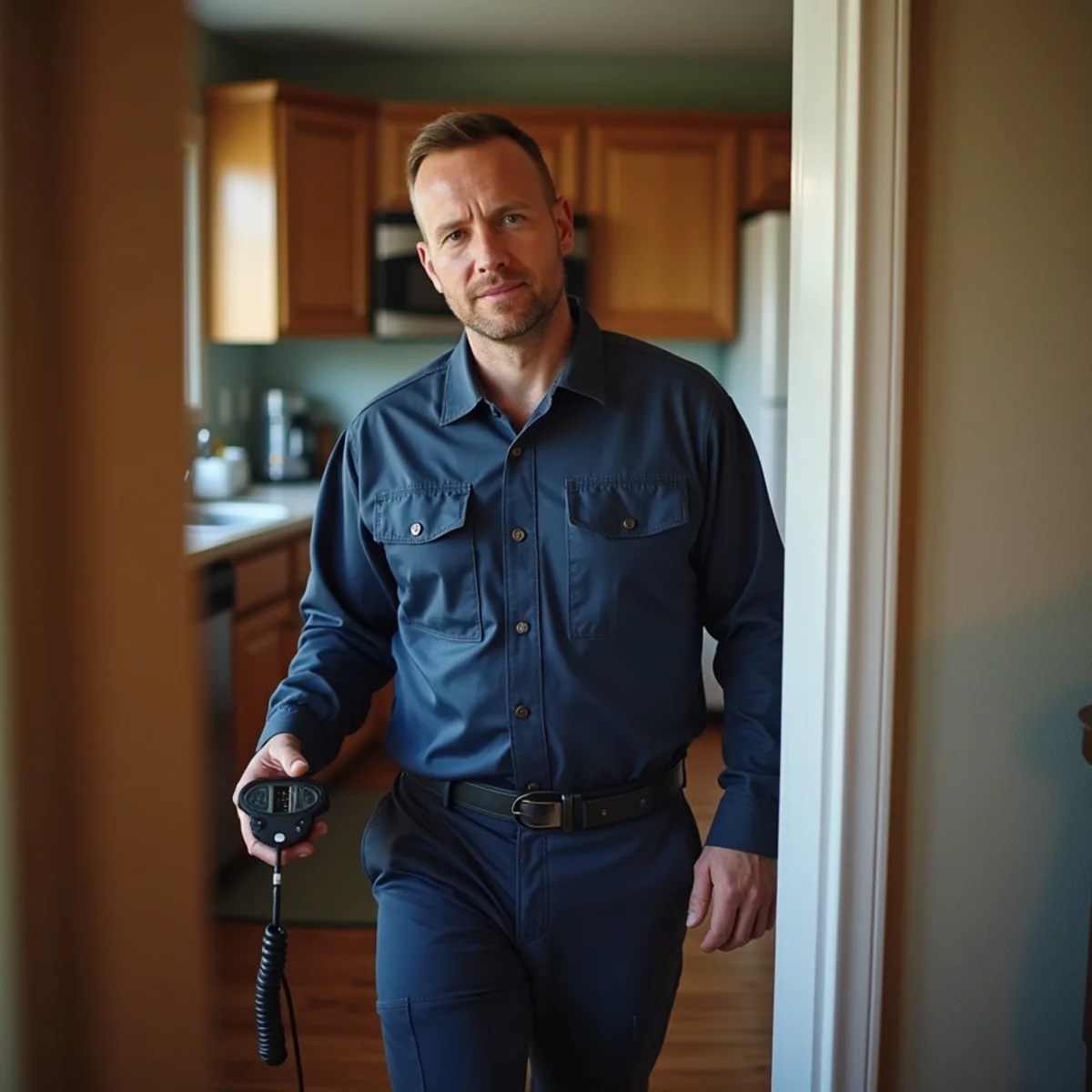
Comfort Air Solutions performs combustion analysis safety testing on gas furnaces across Miamisburg and the Dayton area. It is the same test that has caught unsafe furnaces during routine visits, and it is part of every fall tune-up we perform under our furnace maintenance plans.
Warning Signs of a Carbon Monoxide or Venting Problem
Headaches or nausea that ease when you leave the house
Flu-like symptoms that fade at work and return in the evening, especially when several family members feel them at once, deserve a CO test before anything else.
A lazy yellow or orange burner flame
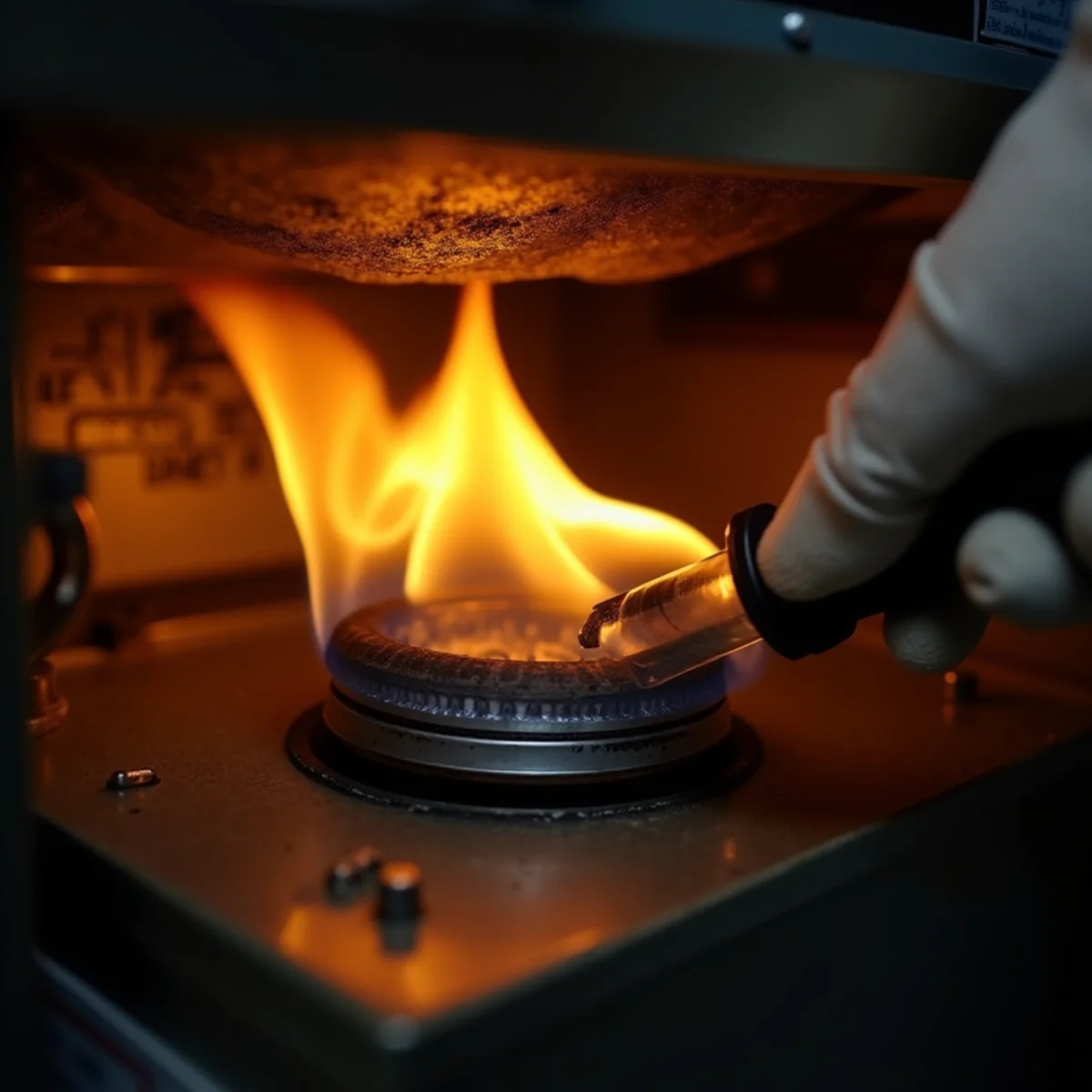
Healthy natural gas burners show a crisp blue flame. Floppy, yellow-tipped flames point to incomplete combustion, which produces carbon monoxide.
Soot or rust around the furnace or draft hood
Black streaks near the burner compartment or rust flakes on the vent connector suggest exhaust is rolling back instead of rising up the flue.
Heavy condensation on windows near the furnace room
Moisture is a normal byproduct of burning gas. When it collects indoors in winter, the exhaust may not be leaving the house.
A furnace that trips its rollout or pressure switch
Repeated lockouts from flame rollout or draft pressure switches are the equipment telling you something is blocking or reversing the exhaust path.
Seeing one of these signs?
Call now — we dispatch fast and give you written options before any work.
What your CO and combustion safety visit includes
Every item below is recorded so you can compare next year’s readings against this year’s.
Room-air CO sampling
A baseline reading in the living space, the bedrooms hallway and the mechanical room before the furnace is fired.
Flue gas analysis in parts per million
CO, oxygen and stack temperature measured at the furnace outlet, printed or photographed so you keep a copy.
Heat exchanger inspection
A visual and camera look where access allows, plus a flame-watch as the blower starts to spot disturbance from a breach.
Venting and draft check on every connected appliance
Water heater, boiler or furnace sharing a flue, the chimney liner, PVC intake and exhaust terminations, and the condensate drain on high-efficiency units.
Burner, gas pressure and safety-switch review
Burner cleanliness, manifold pressure, flame rollout switches and draft pressure switches tested so they will actually shut the furnace down if something goes wrong.
Alarm placement advice and a written report
Where your alarms sit today, whether a low-level monitor makes sense, and plain-English findings with any repair priced before we start.
How Our Combustion Safety Inspection Works
- 1
Ambient CO check on arrival
Before touching the furnace, the technician samples the air in the living space and the mechanical room so we know the baseline.
- 2
Combustion analysis in the flue
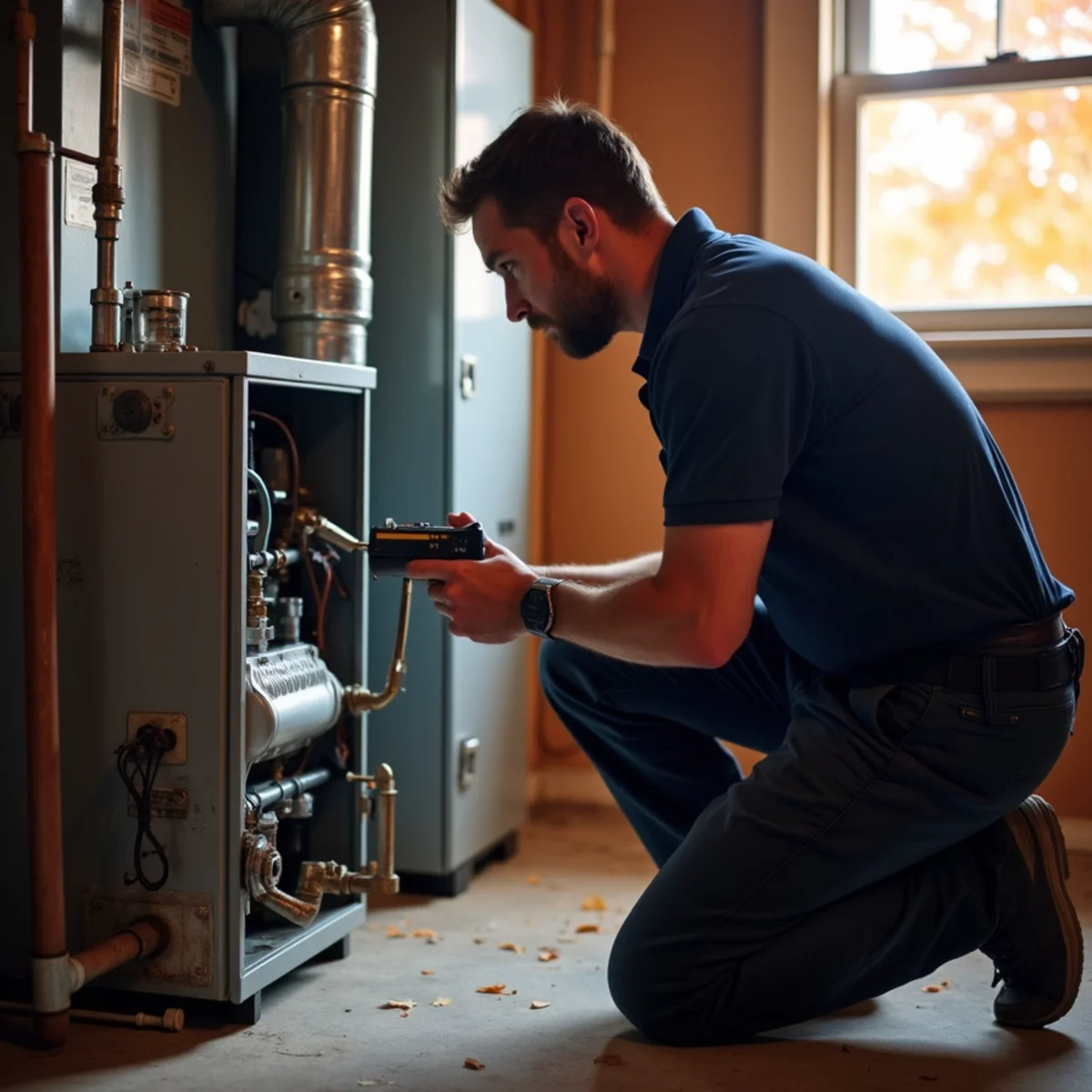
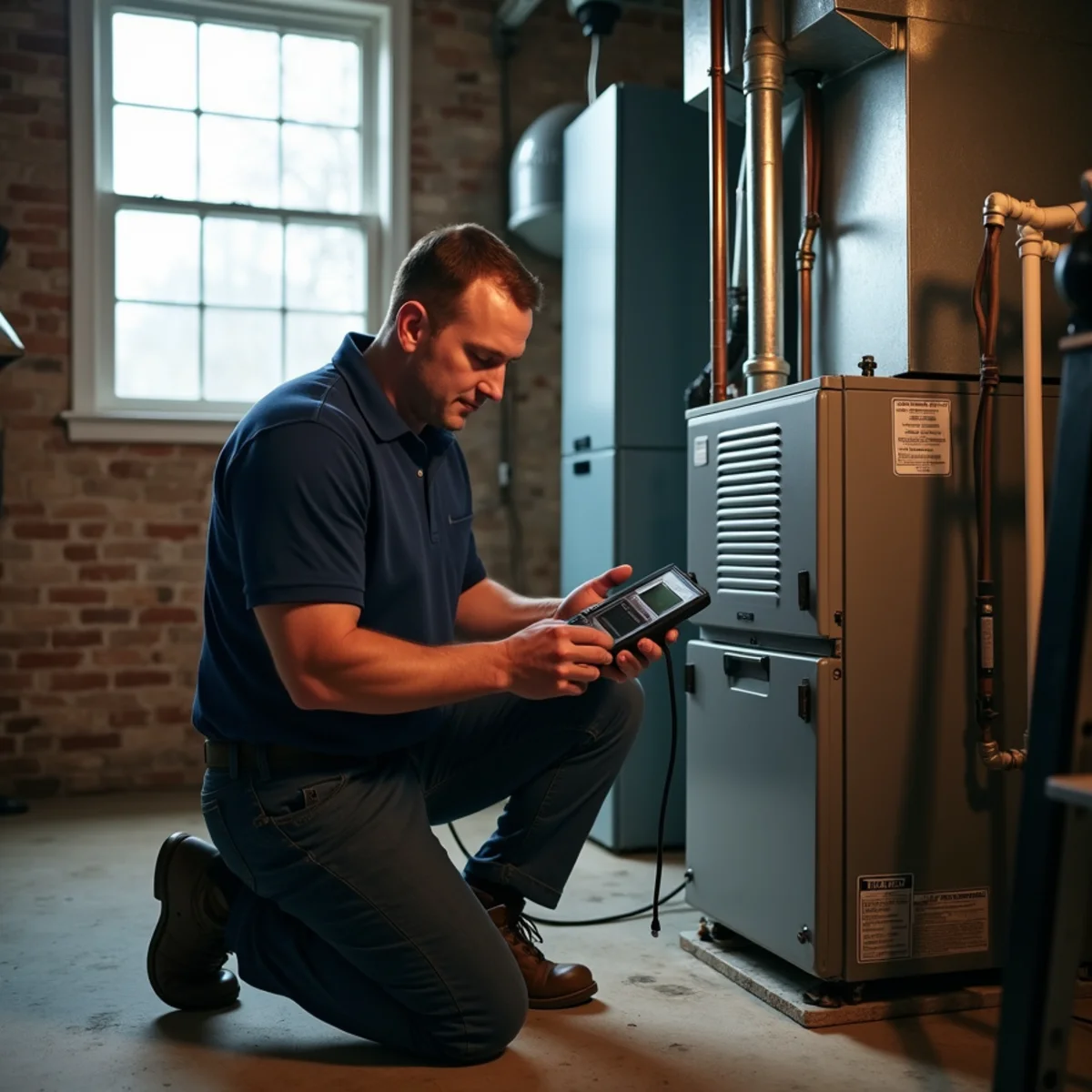
A digital analyzer measures CO, oxygen and flue temperature in the exhaust. Those numbers show whether the burners are firing clean and the gas pressure is set correctly.
- 3
Heat exchanger inspection
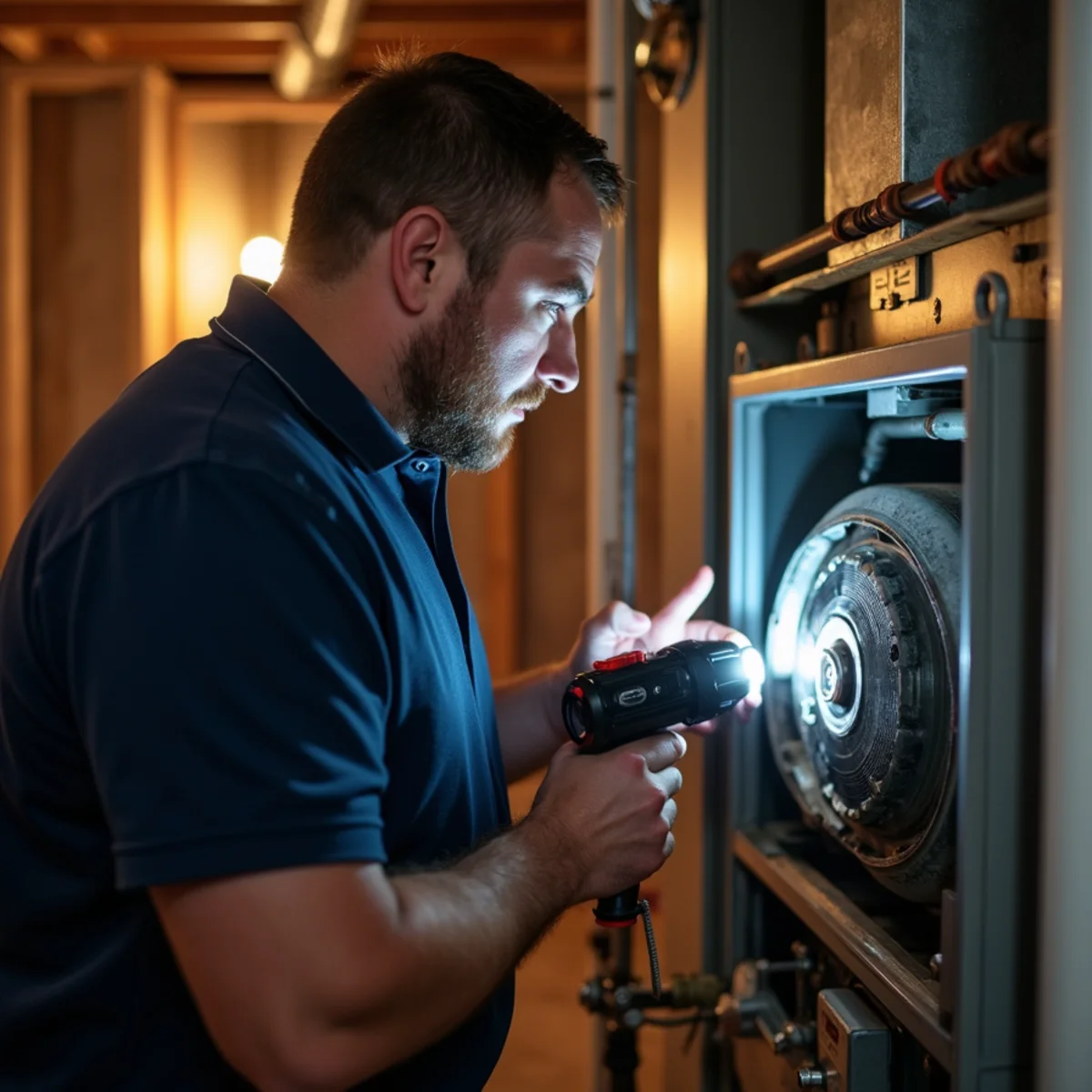
We look at the heat exchanger with a light and camera where access allows, watch the flame for disturbance when the blower starts, and check for cracks, holes or separated seams.
- 4
Draft and venting test
We check draft at the vent connector, inspect the flue for proper slope and sealed joints, and look for blocked chimney liners or PVC intake and exhaust pipes packed with leaves, snow or nests.
- 5
Written findings and next steps
You get plain-English results. If a component is unsafe, we explain the code reason, tag the appliance if required, and lay out repair or replacement options.
What Affects the Cost of CO and Combustion Testing
The inspection itself is a modest service call; any follow-up work depends on the readings.
- Number of gas appliances
- Testing a furnace alone takes less time than checking a furnace, water heater and range that share a vent or a room.
- Maintenance plan membership
- Fan Club members get combustion analysis as part of their scheduled furnace tune-up rather than as a separate visit.
- Venting corrections
- Re-pitching a vent connector is minor work. Relining a masonry chimney orphaned after a furnace upgrade is a larger job.
- Burner and gas pressure adjustments
- Cleaning burners and setting manifold pressure is routine. Replacing a failed inducer motor or pressure switch adds parts.
- Heat exchanger condition
- A cracked heat exchanger on an older furnace usually tips the decision toward replacement. On a newer unit, manufacturer parts coverage may apply, and we check that for you.
Low-Level CO Monitors vs. Standard UL Alarms
Most store-bought CO alarms are built to the UL 2034 standard. That standard is designed to prevent nuisance alarms, so the units are required to wait before sounding at lower concentrations. Healthy adults are the reference point, not infants, older relatives or anyone with heart or lung conditions.
A low-level CO monitor displays readings far below the point a standard alarm reacts to and alerts sooner. We install them as part of our indoor air quality services, and we still recommend UL-listed alarms on every sleeping level as required by code.
Why Cracked Heat Exchangers Matter
The heat exchanger is the metal wall between the fire and the air you breathe. Years of heating and cooling cycles, especially in a furnace that is oversized or starved for airflow by a clogged filter, can crack that metal. Once it is breached, combustion gases can mix into the supply air.
We never call a heat exchanger cracked without showing you the evidence: a photo, a camera image or a combustion reading that changes when the blower kicks on. If replacement makes more sense than repair, our furnace installation team will give you options at more than one price point.
Older Homes and Orphaned Chimneys
Many homes around Miamisburg and in older Dayton neighborhoods still vent a gas water heater into a masonry chimney that once served an old furnace too. When the furnace is swapped for a high-efficiency model that vents through PVC, the water heater is left alone in a flue that is now far too large. It may not draft properly on mild days, and that is a classic CO callback we look for.
Inside a Furnace Carbon Monoxide Test: Readings, Faults and What They Mean
A combustion report can look like a receipt full of abbreviations. This guide walks through the numbers our technicians record, the faults that push those numbers the wrong way, and the household habits in Miami Valley homes that cause CO trouble even when the furnace itself is healthy.
The numbers on your combustion printout
- O2 (oxygen, percent): how much unused air leaves with the exhaust. Too little means the flame is starved; too much means the burners are running lean or air is leaking into the flue path.
- CO as-measured (ppm): the raw carbon monoxide in the sample. Useful, but it can be watered down by extra air, so a low number alone does not prove clean burning.
- CO air-free (ppm): the same reading mathematically corrected to remove that dilution. This is the figure appliance standards and our techs judge against, because it cannot be hidden by a leaky draft hood.
- CO2 (percent): calculated from the oxygen reading; it confirms the fuel-to-air mix lines up with the manufacturer’s target.
- Stack temperature: how hot the exhaust is as it leaves. Unusually high points to poor airflow across the heat exchanger; unusually low on an older atmospheric furnace can mean condensation forming inside a metal flue.
- Draft (inches of water column): measured with a manometer on natural-draft and induced-draft furnaces to prove the flue is pulling, not pushing, exhaust.
We also watch how CO behaves over time. A spike right at ignition that settles within a few minutes is typical. A reading that climbs the longer the burners run, or jumps the moment the blower starts, is the pattern that gets our full attention.
Fault-by-fault: from symptom to fix
| Warning sign at home | Probable source | Our measurement | Usual remedy |
|---|---|---|---|
| Yellow, lifting or noisy flames | Dirty burners, rust scale, wrong gas pressure | Air-free CO, O2, manifold pressure against the nameplate | Clean burners and orifices, set gas pressure |
| CO rises when the blower turns on | Breached heat exchanger letting supply air disturb the flame | Flame-watch at blower start, camera inspection, CO at supply registers | Heat exchanger replacement or a new furnace |
| Rollout switch keeps tripping | Blocked secondary heat exchanger or restricted flue | Draft, stack temperature, visual of flue passages | Clear the blockage, correct venting, replace the tripped switch if damaged |
| Pressure switch lockouts on a 90%+ furnace | Iced or nested PVC termination, sagging pipe holding water | Pipe slope, termination condition, inducer draw | Clear and re-pitch pipe, reroute terminations away from drift zones |
| Water heater smells hot or scorches near its top | Spillage from a flue too large or a house under negative pressure | Spillage test at the draft hood with fans and dryer running | Chimney liner, dedicated vent, or makeup-air correction |
| Low-level monitor shows small, repeated readings | Intermittent venting problem or a garage source | Room sampling at several times of day, appliance-by-appliance testing | Depends on the source; we trace it before recommending parts |
Miami Valley homes that create their own CO risk
Plenty of CO calls start with a furnace that tests fine by itself. The trouble comes from how the house behaves around it, and a few situations repeat across our service area:
- Tightened-up older houses. New windows, spray-foamed rim joists and a powerful range hood can pull the basement negative, so an atmospheric water heater spills exhaust instead of drafting. We test with every exhaust fan and the dryer running to recreate a worst-case evening.
- Attached garages. Warming up a car in a garage on a February morning can register on a sensitive monitor inside, and homeowners understandably blame the furnace. Room readings taken at different times help separate the two.
- Sidewall vents and drifting snow. Condensing furnaces on the windward side of homes near open farm fields west of town can have terminations buried after a storm; placement matters as much as pipe size.
- Portable generators after outages. Running one near an open garage door or a window well is one of the most dangerous CO sources we see. Our storm damage HVAC repair page covers safe restarts after a power loss.
Myths we hear on safety calls
“My alarm has never gone off, so the furnace is fine.” A standard alarm is designed to stay quiet at low concentrations, so silence tells you little about slow, chronic exposure. “A new furnace can’t produce CO.” Poor startup setup and bad vent runs cause problems on brand-new equipment too, which is why we fire and measure every installation. “The smell of gas means CO.” Natural gas carries an added odorant; carbon monoxide carries none, so any gas smell is a separate emergency for your utility.
For the step-by-step on what to do the moment an alarm sounds, read our guide to a CO alarm going off near the furnace. Homeowners who like a yearly baseline usually pair this test with a fall furnace tune-up so the readings sit side by side from one season to the next.
Why choose Comfort Air Solutions for carbon monoxide and furnace safety
Combustion testing is standard practice for us
Flue readings are part of how our technicians work on gas equipment, not an upsell. One Google review describes exactly that: a routine visit where the analyzer flagged a furnace that was not safe to keep running.
Evidence before any bad news
We show you the photo, the camera image or the reading that changed. You get written options, and on replacement, more than one price point, before anything is done.
Someone answers at 2 a.m.
Our emergency line runs around the clock, nights, weekends and holidays, so once responders clear the house you are not waiting until Monday to learn what caused the alarm.
Low-level monitors and every make of furnace
As a factory-authorized Bryant® dealer we know that equipment inside and out, but we test and repair every brand, and we install low-level CO monitors for families who want an earlier warning.
CO & Furnace Safety near Miamisburg
Calls for CO testing cluster where the housing is oldest. In Dayton’s older neighborhoods and the 1950s–60s ranches of West Carrollton, we still find water heaters left alone in oversized masonry chimneys after a furnace upgrade. Post-war homes across Kettering often have original vent connectors worth a closer look, and in Germantown’s historic houses we check old flues and shared chimneys carefully. Around our Miamisburg shop, most requests come in the first cold week of fall, when furnaces fire up after a summer of sitting idle.
We provide co & furnace safety from our Miamisburg shop throughout the southern Dayton suburbs, including:
- West Carrollton, OH
- Moraine, OH
- Springboro, OH
- Germantown, OH
- Kettering, OH
- Centerville, OH
- Dayton, OH
- Franklin, OH
- Carlisle, OH