Quick answer
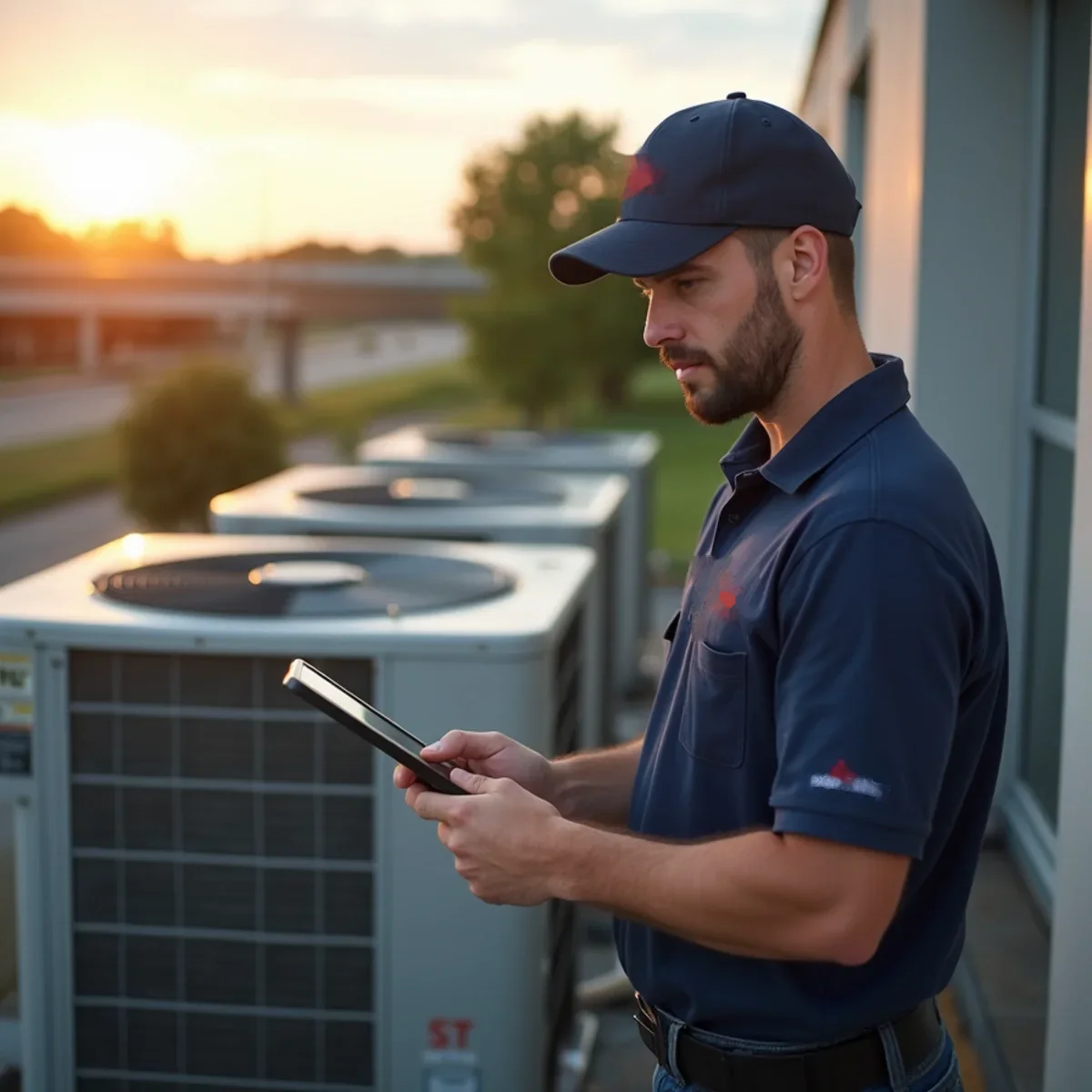
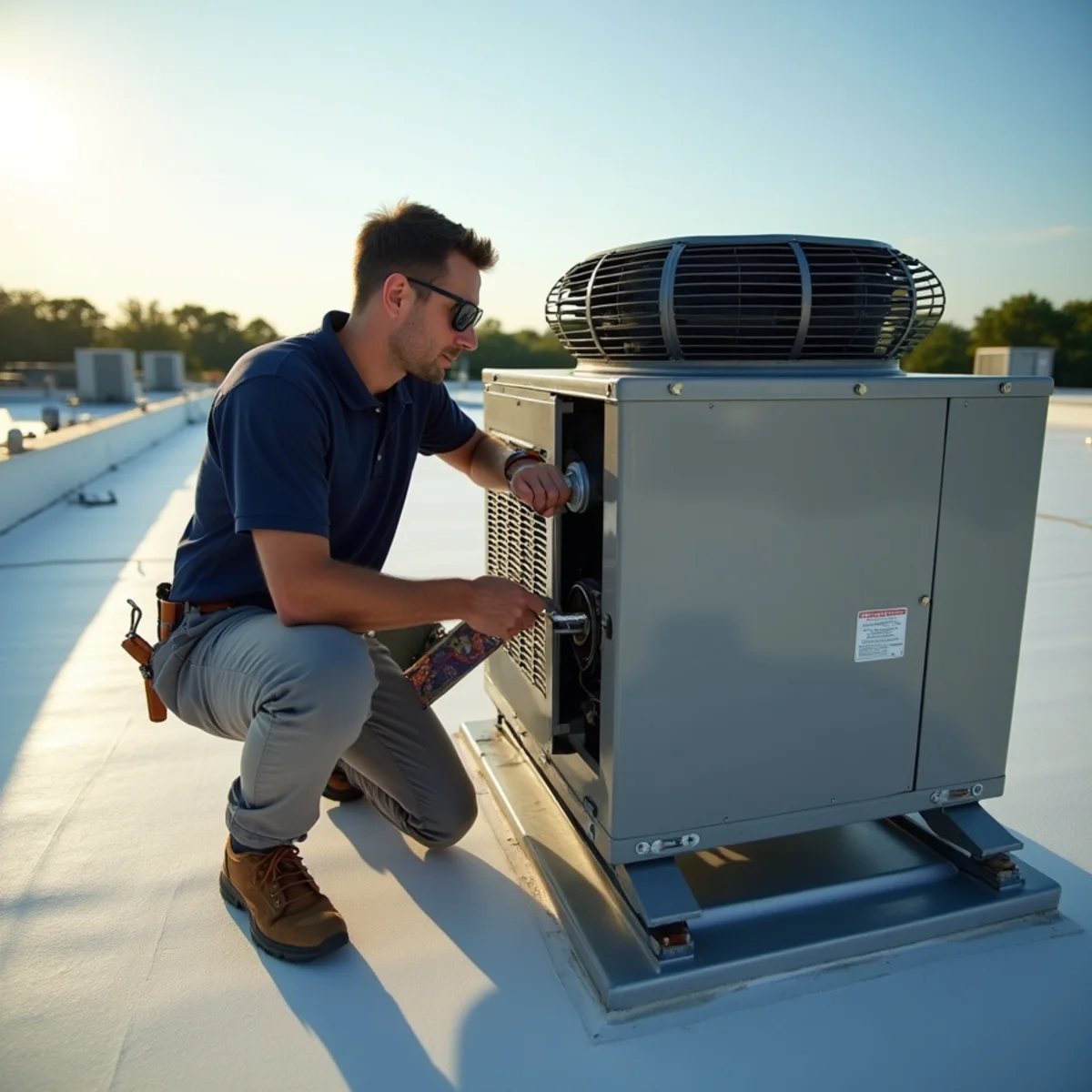
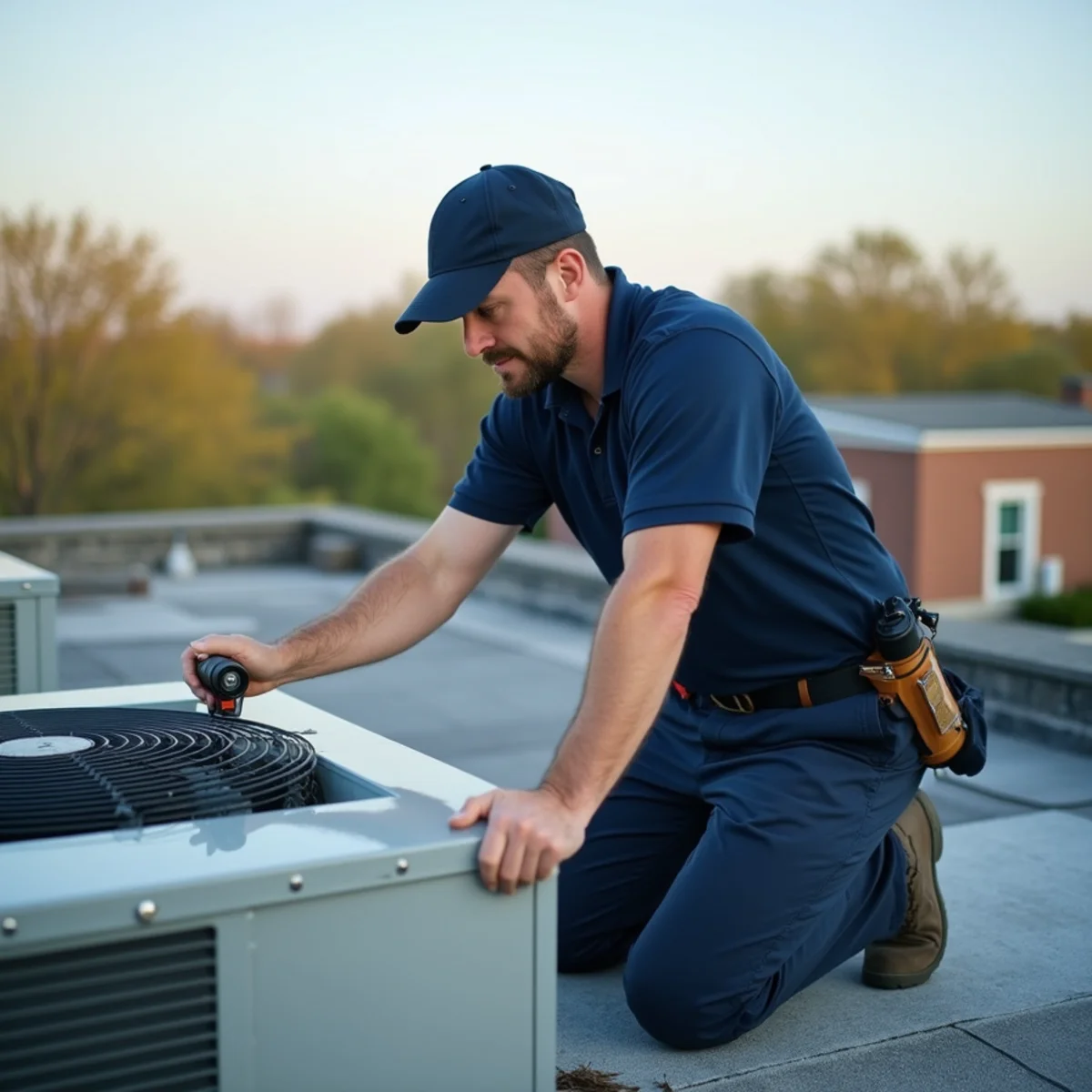
Commercial HVAC in Miamisburg, OH from Comfort Air Solutions covers rooftop units, split systems, VAV boxes and small chillers for offices, shops, restaurants, churches and light manufacturing spaces. We repair every make, run planned maintenance around your business hours, and give building owners written readings and options before any work starts.
Comfort Air Solutions has served light commercial customers alongside homeowners for years. Our technicians work on packaged rooftop units (RTUs), split systems, variable air volume (VAV) systems and small chillers in the office, retail, medical and restaurant spaces that line the business parks off I-75.
Small commercial buildings rarely need a large mechanical contractor with a project-management layer. They need a technician who shows up, knows what a failed economizer actuator looks like, and can get a dining room cooled before the lunch rush.
We service all makes, and as a factory-authorized Bryant dealer we can also quote replacement packaged units when a rooftop system has reached the end of the line.
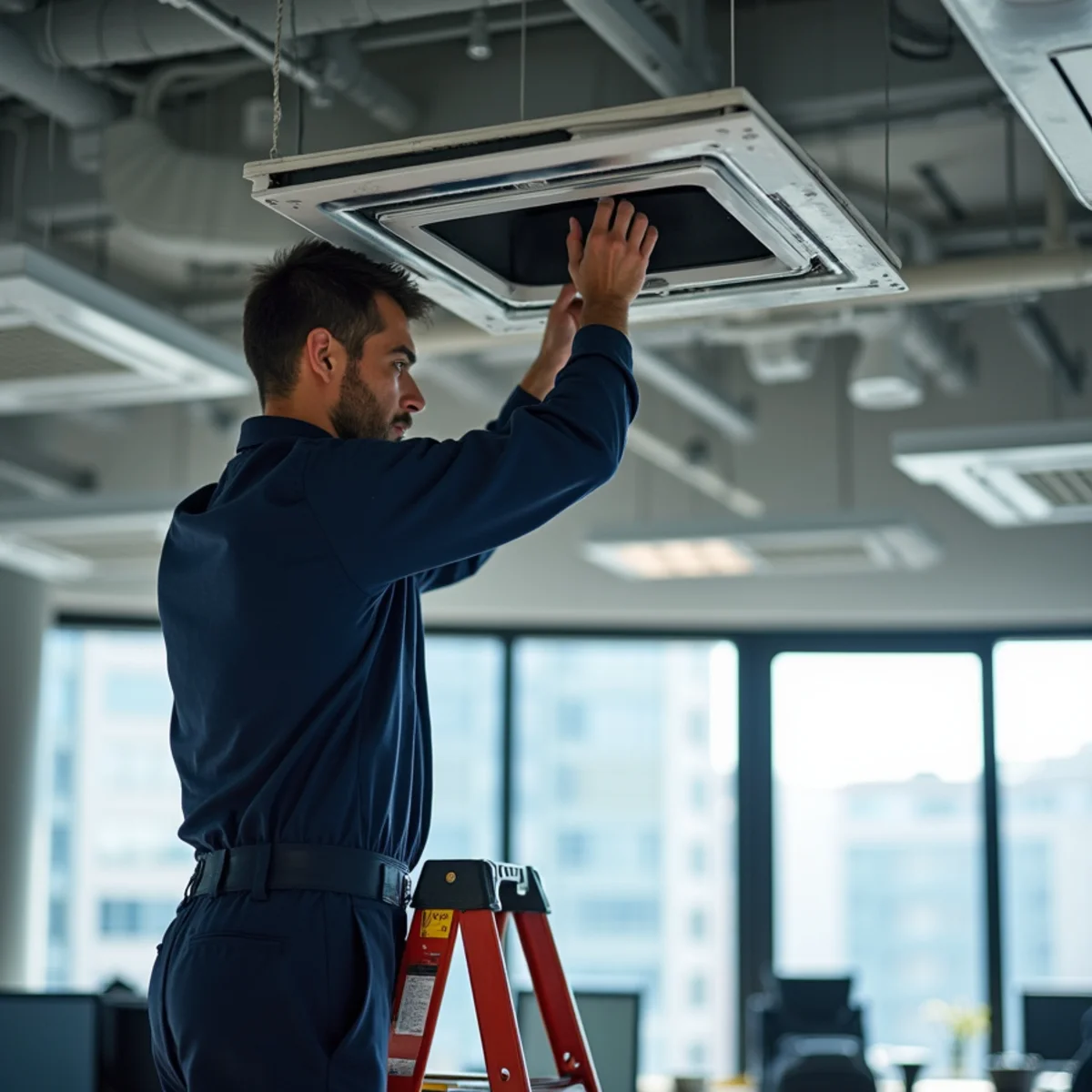
Signs Your Commercial HVAC Needs Service
Hot and cold complaints from different zones
Uneven temperatures in a VAV building often trace to a stuck damper, a failed box controller or a static pressure setpoint that has drifted.
An RTU short-cycling or tripping on high pressure
Dirty condenser coils on the roof, a failed condenser fan motor or a refrigerant problem make compressors work harder and trip safeties.
Kitchen or dining room too warm during service
Restaurants fight heat from cooking lines and makeup air. When capacity falls short, it usually shows up during peak hours first.
Water stains on ceiling tiles below the unit
Clogged condensate drains, cracked drain pans and poorly sealed curb flashing all let water into the space below a rooftop unit.
Utility bills climbing without a change in hours
An economizer stuck open in summer or closed in mild weather wastes energy quietly, month after month.
Musty or stale air in the office
Outdoor air that is not being brought in correctly, or loaded filters, lead to stuffy rooms and complaints about air quality.
Seeing one of these signs?
Call now — we dispatch fast and give you written options before any work.
What our light commercial service covers
Whether it is one emergency call or a standing maintenance agreement, these are the deliverables you can expect.
Full RTU inspection per unit
Compressor and fan motor amp draw, refrigerant pressures, belts, bearings, contactors and the gas heat section, logged by unit number.
Economizer and outdoor air check
Damper linkage, actuator, and changeover sensor tested so free cooling works in spring and fall and the dampers are not stuck wide open in July.
Condensate and curb leak prevention
Drain pans cleaned, traps flushed and curb flashing looked over, because most ceiling-tile stains start at the roof.
Coil cleaning on the roof
Condenser coils washed of cottonwood, dust and kitchen grease so compressors are not fighting high head pressure all summer.
Controls and zoning verification
Thermostats, VAV box controllers and static pressure setpoints checked against how the space is actually used today.
Written service report and equipment log
A running record of what each unit needed, what is wearing, and which units to budget for, sent to the owner or property manager.
How We Handle a Commercial Service Call
- 1
Scheduling around your operation
We ask when the building is occupied and plan work before opening, after closing or on weekends where possible, so tenants and customers are not disrupted.
- 2
Roof and equipment walk
The technician checks access, fall protection points and each unit's nameplate so parts and refrigerant type are known before diagnosis begins.
- 3
Diagnosis with readings
We record supply and return temperatures, refrigerant pressures, amp draw, economizer operation and, on VAV systems, box airflow and static pressure.
- 4
Clear repair options
You get a written explanation of what failed, what it affects and what it will take to fix, including whether the repair is worth it on an aging unit.
- 5
Repair and verify
After repairs we run the equipment through its stages, confirm the thermostat or building controls respond, and note anything to watch at the next maintenance visit.
What Drives Commercial HVAC Service Costs
Every building is different. These are the variables that move a commercial repair or maintenance quote the most.
- Number and tonnage of units
- A single small RTU on a retail suite is a very different scope than a row of units serving a multi-tenant office.
- Roof access and equipment location
- Units reached by an interior hatch are quicker to service than roofs that need extension ladders, lifts or a crane for replacement.
- System type and controls
- VAV systems and chillers involve controllers, sensors and sequences of operation that take more diagnostic time than a simple split system.
- After-hours timing
- Work scheduled outside normal hours to protect your business can affect labor rates. We discuss that up front.
- Parts availability and refrigerant
- Older units on phased-out refrigerants or discontinued control boards can make repairs harder to source and more expensive.
Planned Maintenance for Offices, Retail and Restaurants
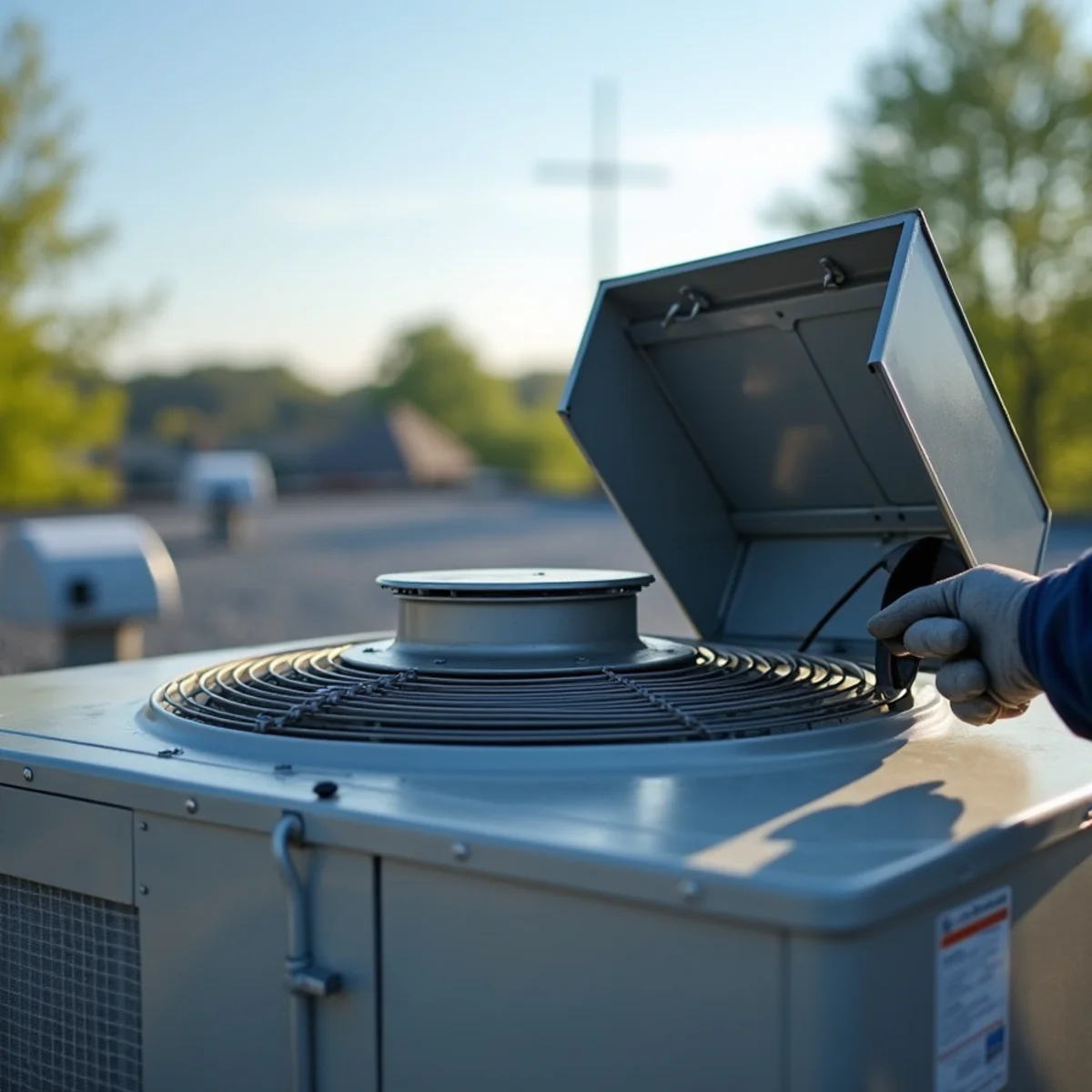
Commercial equipment runs longer hours than residential systems, so it wears faster. A planned maintenance agreement puts every unit on a schedule: filters on a set interval, belts inspected and replaced, condenser coils cleaned, drains flushed and economizers tested for proper operation.
- Spring cooling startup: coil cleaning, refrigerant check, condenser fan and compressor amp readings
- Fall heating startup: gas heat section inspection, combustion and CO testing, ignition and flame sensor service
- Filter changes sized to your occupancy, from quarterly in offices to monthly in busy kitchens
- A running equipment log so budget decisions are based on real service history
Serving Moraine, Miamisburg and the I-75 Business Corridor
Our shop is in Miamisburg, a short drive from the industrial and flex buildings in Moraine, the offices near the Austin Boulevard interchange, and the retail and medical buildings around Austin Landing in nearby Miami Township. Being close means shorter response times when a rooftop unit fails on a hot afternoon.
We also handle the homes of the people who own those businesses, which is why many of our commercial customers first knew us through residential air conditioning service.
Repair or Replace an Aging Rooftop Unit
When an RTU needs a compressor, heat exchanger or major control board and already has many seasons on the roof, replacement often costs less over time. We compare repair cost, remaining life, efficiency and refrigerant type, then give you a straight recommendation with more than one option.
Rooftop Units and Small-Building Systems: A Field Guide for Owners
Most light commercial buildings around Miamisburg run on packaged rooftop units: compressor, condenser, evaporator, blower and a gas heat section in one cabinet bolted to a curb. That design is simple to live with until one piece fails and a tenant calls about an 82-degree office. Here is how our technicians think through those calls, what the readings mean, and which choices matter when a unit is due for replacement.
Common RTU faults, traced from the complaint
| Complaint from the space | Likely cause on the roof | What we measure | Typical correction |
|---|---|---|---|
| Warm air in summer, fan still running | Failed compressor contactor, capacitor or a tripped high-pressure switch | Compressor amps against its RLA rating, head pressure, condenser fan operation | Replace the failed electrical part, clean the coil, find why pressure climbed |
| Cooling slowly fades through the afternoon | Low refrigerant charge or a condenser coil packed with cottonwood and grease | Superheat and subcooling, temperature split across the evaporator | Leak search and repair, coil wash, recharge by weight |
| Humid, clammy space on mild days | Economizer stuck open, bringing in wet outdoor air | Damper position, actuator signal, changeover sensor | Repair or replace actuator, recalibrate changeover |
| No heat on a cold morning | Failed igniter, flame sensor, inducer or rollout switch in the gas section | Ignition sequence, inducer draw, flue CO and temperature rise | Replace the failed component, verify clean combustion |
| Squealing at startup | Worn or loose blower belt, dry bearings | Belt tension and alignment, bearing play, motor amps | New belt and sheave alignment, lubricate or replace bearings |
| Ceiling stain under the unit | Plugged drain trap, cracked pan, curb gasket failure | Water path from pan to roof, trap depth, curb seal | Clear and re-trap drain, patch or replace pan, reseal curb |
The readings behind a healthy rooftop unit
- Superheat and subcooling: two refrigerant-side numbers that tell a technician whether the charge and metering device are right. Topping off a system without them is guessing.
- Amp draw compared with RLA: a compressor pulling close to or above its rated load amps is working too hard, usually because of a dirty coil or a charge problem.
- Temperature split: the drop from return air to supply air across the cooling coil, checked against what the unit should deliver at that day’s humidity.
- External static pressure: how hard the blower is pushing against filters, ductwork and diffusers. High static starves the coil and shortens motor life.
- Heat-section temperature rise: the warm-up across the gas heat exchanger, which should land inside the range printed on the unit’s rating plate.
- Economizer sequence: we command the dampers open and closed and confirm the controller actually switches to outdoor air when conditions allow.
Choosing a replacement unit: honest tradeoffs
| Option | Where it pays off | What to weigh |
|---|---|---|
| Single-stage cooling | Small retail suites with steady, simple loads | Lowest complexity, but runs full-blast even on mild days |
| Two-stage or variable-speed | Offices and churches with big swings in occupancy | Better humidity control and quieter operation, more controls to maintain |
| Integrated economizer | Buildings occupied during cool spring and fall days | Free cooling from outdoor air, but only if the actuator and sensor are serviced |
| Gas heat vs heat pump RTU | Gas suits long heating hours; heat pump suits all-electric sites | Utility availability at the building, winter design temperatures, roof weight |
Newer units are moving to lower-global-warming refrigerants such as R-454B, which changes service tools and procedures but not how you use the building. Every recovery and charge we perform follows EPA Section 608 handling rules, and replacements that involve gas piping or electrical changes are permitted and inspected as the local jurisdiction requires.
What Miami Valley buildings throw at rooftop equipment
- Cottonwood season. Late spring fluff from trees along the Great Miami River mats onto condenser coils in business parks near the water. A coil that looks fine in April can be choked by mid-June.
- Flat roofs and freeze-thaw. Ponding water and repeated freezing work at curb flashing and drain lines, so winter leaks often show up as spring ceiling stains.
- Restaurant exhaust. Kitchen hoods discharge grease that drifts onto nearby units; those coils and filters need a shorter cleaning cycle than an office roof across the lot.
- Cold-weather economizer trips. On bitter mornings a poorly set economizer can let freezing air across the coil and trip safeties before the heat section catches up.
Owners who want to plan instead of react can start with our checklist for rooftop unit maintenance in Moraine and Miamisburg and the broader guide to commercial HVAC maintenance along I-75. If tenants complain about stale air more than temperature, our indoor air quality work covers filtration and ventilation upgrades for small buildings.
Why choose Comfort Air Solutions for light commercial HVAC
A local shop, not a dispatch center
Customers consistently say someone picks up the phone. For a restaurant with a dead rooftop unit at 11 a.m., that is the difference between a lost lunch shift and a fix before dinner.
Around-the-clock emergency service
Coolers, server closets and dining rooms do not wait for office hours. Our emergency line runs 24/7, including weekends and holidays.
Decades on rooftop and split equipment
Our team brings 25+ years in heating and cooling, and owner Kevin Turner keeps an eye on replacement installs himself.
Written options at more than one price point
Repair-versus-replace decisions come with numbers you can take to a partner or landlord, and as a factory-authorized Bryant® dealer we can quote packaged replacement units directly. Financing is available with approved credit.
Light Commercial HVAC near Miamisburg
Most of our commercial calls come from the flex and industrial buildings in Moraine, the strip centers and small offices along SR-741 and SR-73 in Springboro, and older brick storefronts in West Carrollton and Dayton. We also cover the retail and office corridor down I-75 toward Springdale for owners who already use us at their homes or other locations. Because our trucks start the day in Miamisburg, a rooftop unit anywhere along that stretch of interstate is a short drive away.
We provide light commercial hvac from our Miamisburg shop throughout the southern Dayton suburbs, including:
- West Carrollton, OH
- Moraine, OH
- Springboro, OH
- Germantown, OH
- Kettering, OH
- Centerville, OH
- Dayton, OH
- Franklin, OH
- Carlisle, OH