Quick answer
Most heating and cooling problems in Kettering ranch homes come from airflow, not the equipment. Original ductwork in these 1950s and 1960s houses usually has one small hallway return and leaky attic or crawlspace runs. Adding returns, sealing ducts and sizing the next furnace or AC with a load calculation fixes more than buying a bigger unit.
Post-war ranches and split-levels make up much of Kettering. Their layouts, slabs and original return air create predictable comfort problems, and most of them have practical fixes.
Short answer: most comfort complaints in Kettering’s 1950s and 1960s ranch homes trace back to airflow, not the furnace or AC itself. Original return air was sized for a small furnace and no air conditioning, and later equipment was dropped into that same duct system. Fixing returns, sealing ducts and sizing replacement equipment correctly usually solves more than a bigger unit would.
What makes Kettering ranch homes different
Kettering grew fast after World War II, and a large share of its houses are brick and frame ranches, split-levels and tri-levels built for young families working at the nearby plants and offices. The designs were efficient for the era, but the heating systems were planned before central air was common.
Three construction types show up again and again:
- Basement ranches with a furnace in an unfinished or partly finished basement and a single central return in the hallway.
- Slab or crawlspace ranches where the furnace sits in a utility closet and ducts run through the attic or under the floor.
- Split-levels and tri-levels where the lower family room stays cold in winter and the upper bedrooms bake in July.
The undersized return problem
A furnace and AC can only move as much air as they can pull back through the returns. Many Kettering homes still have one return grille in the hallway, sometimes with a panned joist cavity behind it instead of a real duct. When a three-ton air conditioner gets added to that setup, total external static pressure climbs well past what the blower is rated for.
Signs your returns are too small
- A whistling or roaring sound at the hallway return grille.
- Bedroom doors that slam shut or pull tight when the blower starts.
- A filter that bows inward or gets sucked into the rack.
- An evaporator coil that freezes on humid days even with a new filter.
- Back bedrooms several degrees warmer than the living room.
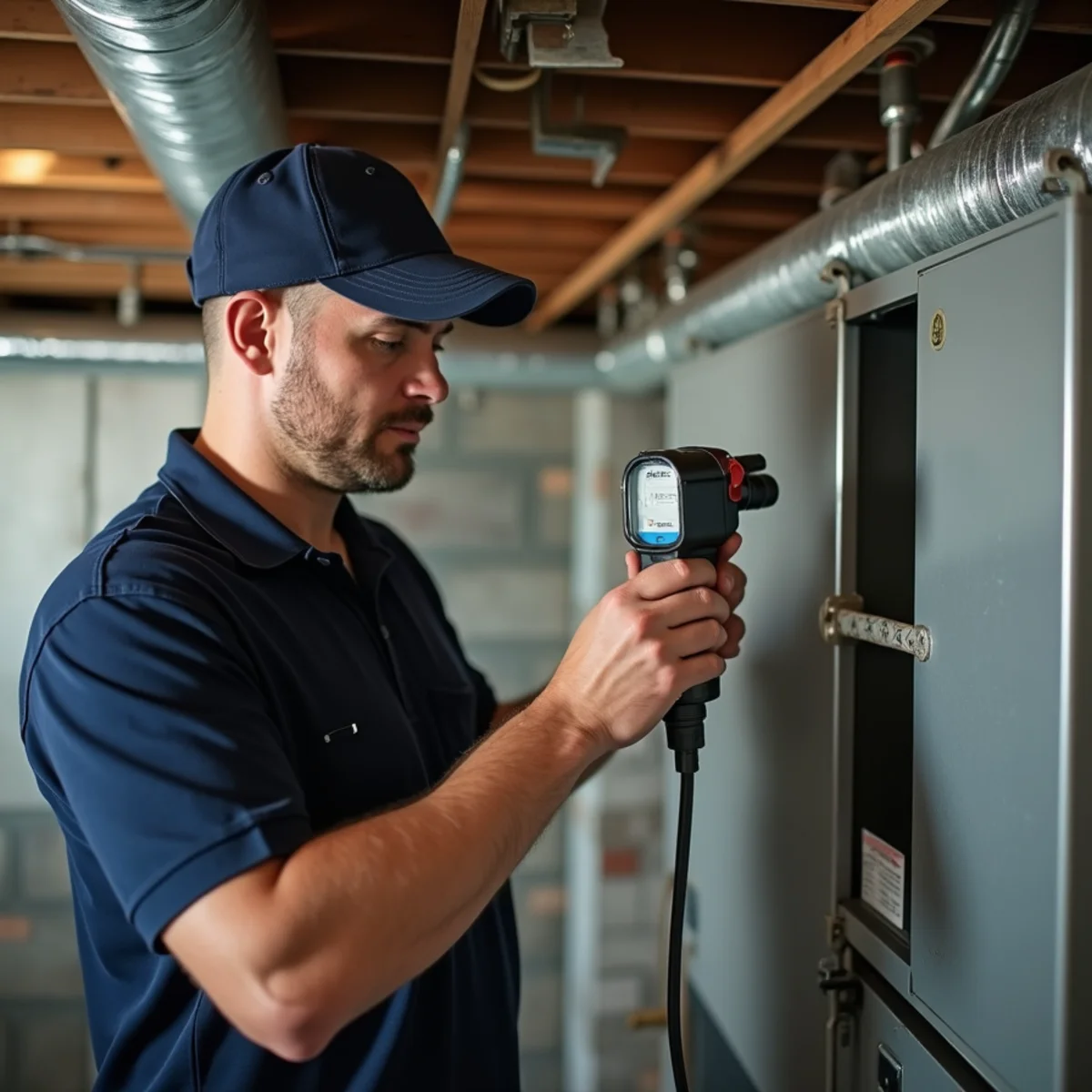
We confirm the problem by measuring static pressure with a manometer, not by guessing. Adding a second return, installing jumper ducts or transfer grilles from closed bedrooms, and enlarging the filter rack are common fixes. Those changes often matter more than any efficiency rating on the equipment.
Attic and crawlspace ducts
In slab ranches, supply ducts often run through a vented attic. On a July afternoon that attic air can be far hotter than outside, and poorly sealed joints leak cooled air into it. Crawlspace ducts have the opposite issue in winter, losing heat to cold, damp air under the floor.
- Seal every accessible joint with mastic, not cloth duct tape, which dries out and falls off.
- Insulate attic duct runs and repair crushed flex duct that has been stepped on over the years.
- Check that crawlspace ducts are hung properly and are not sitting in standing water.
- Clean out old ducts before a new system goes in if they are full of construction debris or pet hair; our air duct cleaning service handles that.
Additions, sunrooms and converted garages
Plenty of Kettering ranches picked up a family room off the back, a three-season porch that became a den, or a garage turned into a bedroom. Those rooms were often tapped off the end of an existing trunk line with one small supply and no return, and they are usually the first place a homeowner points to when we walk in. Stretching the old duct system farther rarely fixes it. A single ductless mini-split head gives that space its own heating and cooling, and it takes the extra load off a blower that was already working hard.
Replacing equipment in a Kettering ranch
When the original equipment finally wears out, the temptation is to buy the same size or go bigger. A Manual J load calculation often shows the opposite. Newer windows, added attic insulation and siding over the years have lowered the load, so a smaller, properly matched system runs longer cycles, removes more humidity and costs less to operate.
| Upgrade | Problem it solves |
|---|---|
| Second return or transfer grilles | Hot or cold back bedrooms, noisy returns |
| Variable-speed blower | Uneven temperatures between levels in split-levels |
| Two-stage or modulating furnace | Short cycling and drafts in smaller homes |
| Media filter cabinet | Restrictive one-inch filters and dust |
| Duct sealing and insulation | Attic losses in slab ranches |
Our HVAC system replacement process starts with those measurements, and we lay out multiple price-point options so you can decide where the money goes. If cooling is the only concern, our air conditioning service team can also evaluate a coil and condenser swap on its own.
Keeping an older Kettering home comfortable
Ranch homes are straightforward to heat and cool once the air moves the way it should. Comfort Air Solutions is a short drive up from Miamisburg, and we work in Kettering neighborhoods every week. Call our office to schedule a system check with static pressure testing, and we will explain in plain English what your house needs.
A troubleshooting map for mid-century Kettering houses
Most of what goes wrong in a post-war ranch or split-level falls into a short list of patterns. The table below matches the complaint we hear on the phone with what usually causes it, and separates the checks you can make yourself from the ones that need instruments and a trained eye.
| What you notice | Most likely cause | Homeowner check | When to call a technician |
|---|---|---|---|
| Lower level of a split-level cold all winter | Supply dampers set for summer; cold slab and block walls | Look for damper handles on basement branch ducts and note their positions | If adjusting them does not close the gap within a few days |
| Upstairs bedrooms hot in July | No return upstairs; attic heat through thin insulation | Open bedroom doors for an hour and see whether the room cools | If the room only cools with the door open, a return or transfer path is needed |
| Whistle at the hallway grille | Return too small for the blower | Confirm the filter is the right size and not clogged | Static pressure testing and a return upgrade |
| Dust on furniture a day after cleaning | Leaky return pulling basement or attic air | Check that the filter fits tightly with no gap around the edges | Duct sealing and a proper filter cabinet |
| Furnace runs in short bursts | Oversized replacement unit or a thermostat in a drafty hallway | Note how many minutes each cycle lasts | Load calculation and thermostat relocation |
Setting your dampers twice a year
Many Kettering basements have manual balancing dampers on each branch duct: a small lever on the side of the round or rectangular pipe. Warm air rises and cool air sinks, so the right setting in January is almost the reverse of the right setting in July. Here is the seasonal routine we teach homeowners:
- Find each damper lever and mark the branch with the room it feeds, using a piece of tape and a marker.
- In late fall, open the dampers feeding the lower level and ground floor fully, and throttle the upper bedrooms back partway.
- In late spring, reverse it: open the upper-level branches and ease back on the lower family room and basement.
- Give each change two or three days before judging it, since brick and block walls take time to warm or cool.
- Photograph the positions that work so the next season’s switch takes five minutes.
If a lever spins freely with no resistance, the damper blade inside may have broken off its shaft, which is a quick repair during a heating system service visit.
Three ranch-house myths we hear every week
- “The unit is too small, so we need a bigger one.” In these houses the equipment is rarely the bottleneck. A larger blower pushed through the same undersized return just gets louder.
- “Running the fan on all summer keeps the house drier.” It does the opposite. With the fan set to on, water sitting on the cold coil evaporates back into the house between cooling cycles. Auto is the better summer setting for humidity.
- “Old ducts should all be torn out.” Heavy galvanized trunks from the 1950s usually just need their joints sealed and a better return. Replacing sound metal wastes money that could go to the parts that actually leak.
Things to know before replacing a 1950s or 1960s furnace
A mid-century basement often hides a few surprises that shape the replacement plan. White or gray paper wrap on older duct joints and boiler pipes may contain asbestos, and it should be left alone and tested rather than scraped. Old round-dial thermostats sometimes hold a sealed mercury switch, which needs proper recycling rather than the trash can.
The biggest one is venting. When an older furnace that shared a masonry chimney with the water heater is replaced by a high-efficiency model vented through PVC, the water heater can end up alone in a flue sized for two appliances. That orphaned heater may not draft well, so we check the chimney and recommend a liner when needed, and we test with a combustion analyzer before we leave. Our carbon monoxide safety testing covers that check on its own if you are not replacing anything yet.
A filter rack that fits tightly matters just as much in these houses as a new blower; for sizes and MERV ratings that suit restrictive returns, see our Ohio furnace filter schedule. When you are ready for a measured answer, book one of our Kettering system checks, which always include static pressure readings.
From our technicians
Notes from the basement: what we measure in Kettering ranches
On a typical ranch or split-level call, the first tool out of the bag is the manometer. We drill small test ports on each side of the blower and read total external static pressure. Most residential blowers are rated around half an inch of water column. In Kettering houses with one hallway return and an AC coil stacked on an old furnace, we regularly read numbers well above that, and the owner has been told for years that they simply need a bigger system.
The honest tradeoff is that fixing returns is less glamorous than new equipment, and it involves cutting into a wall or a closet. But a larger unit pushed through the same restriction gets louder, freezes coils more often and wears out the blower motor sooner.
The other thing we check is the panned return. Many of these homes use a sheet-metal pan nailed across the floor joists as a return duct. Those pans leak badly, and in a basement ranch they can pull air from around the water heater or a dryer vent. Sealing or replacing that pan is one of the least expensive comfort improvements we make.
Want a technician to take a look?
Comfort Air Solutions serves Miamisburg, Dayton and the Miami Valley — 24/7 emergency service.
- 4.8★ · 32 Google reviews
- 25+ years’ experience
- Written options before work
- Factory-Authorized Bryant® Dealer