Quick answer
Your AC is usually safe to run after a storm if the outdoor unit sits level, is clear of debris, never stood in floodwater, shows no scorch marks, and power has been steady for about 30 minutes. A tripped breaker, kinked lines, water in the electrical panel or a dead system with breakers on means leave it off.
Before you flip the thermostat back to Cool after a hailstorm, outage or flood, take ten minutes to look for the damage that turns a simple restart into a costly failure.
After a storm, your AC is usually safe to turn back on if the outdoor unit is upright, free of debris, was never under water, and the power has been stable for at least 30 minutes. If you see standing water around the unit, bent or crushed coils, a tilted pad, or scorch marks on the electrical panel, leave it off and have it inspected first.
Southwest Ohio gets every kind of warm-season storm: straight-line winds, hail, lightning and the occasional tornado. Xenia's history with tornadoes is well known across the Miami Valley, and each type of storm leaves a different kind of damage behind.
A ten-minute walk-around before restarting
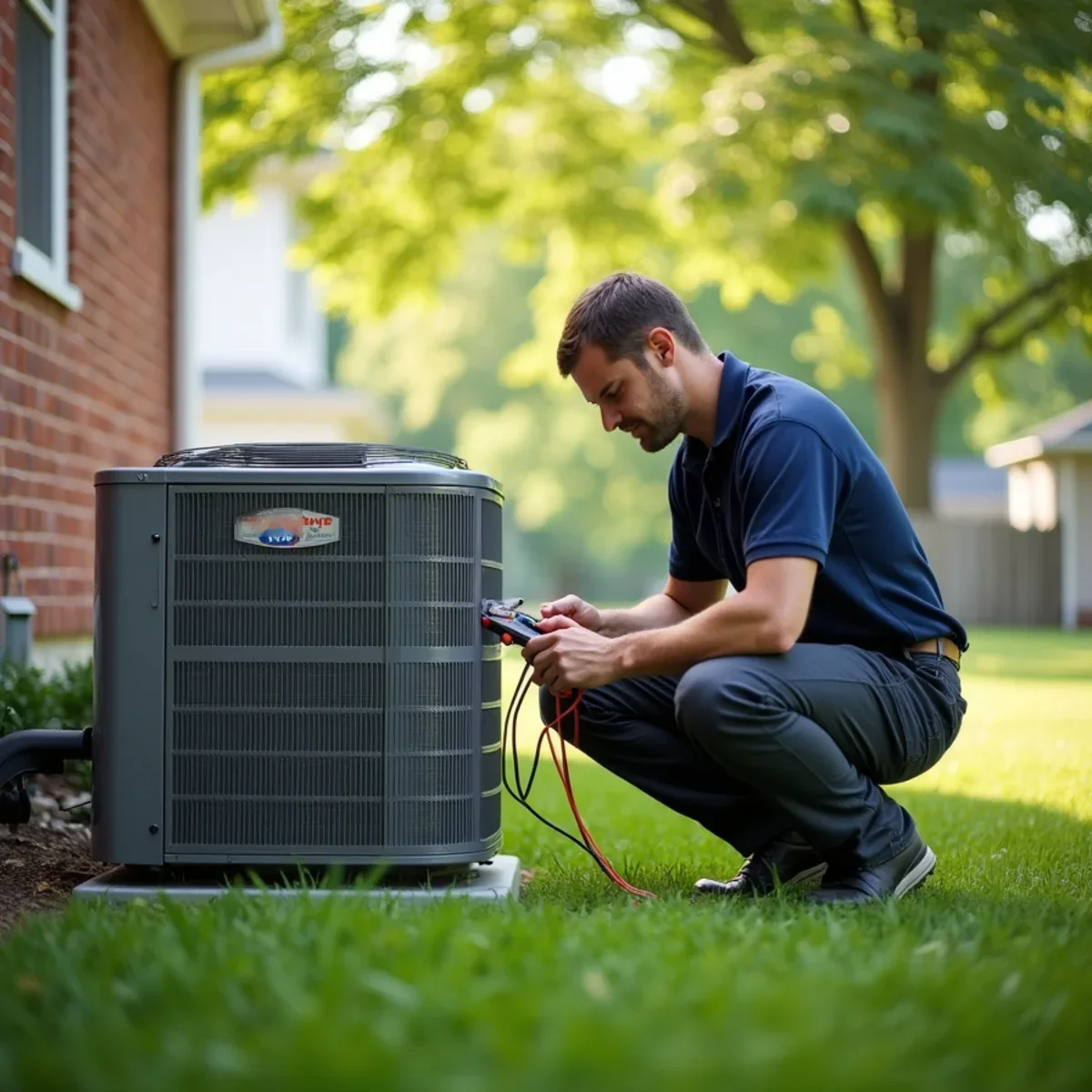
- Look at the outdoor unit from a few feet back. Is it level on its pad, or did wind or a falling limb shift it?
- Check the copper refrigerant lines where they enter the house for kinks, crushed insulation or oily stains that suggest a leak.
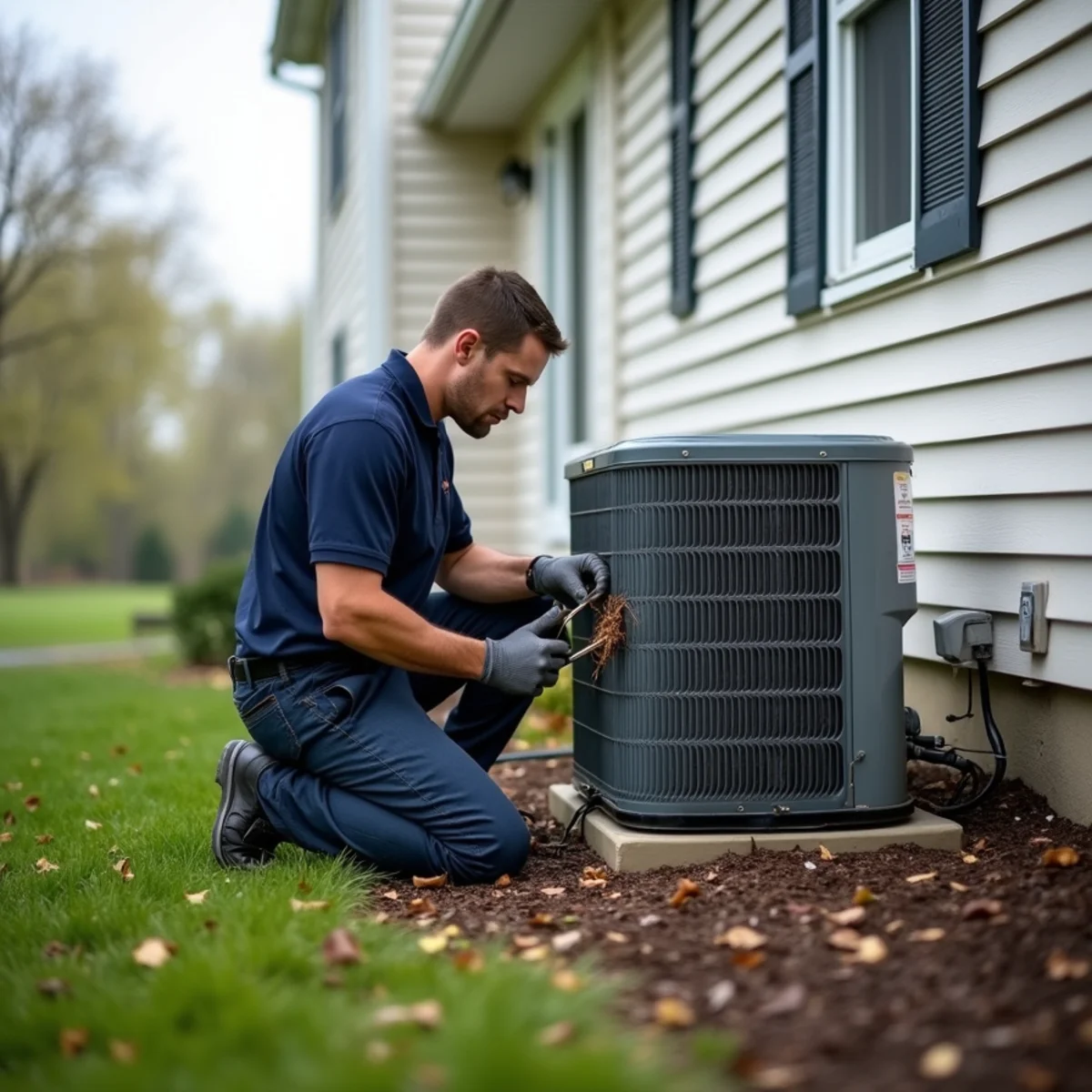
- Clear branches, leaves and fence pieces from the top grille and sides by hand, with the disconnect pulled or breaker off.
- Look at the coil fins. Light denting is common; flattened sections the size of your palm restrict airflow.
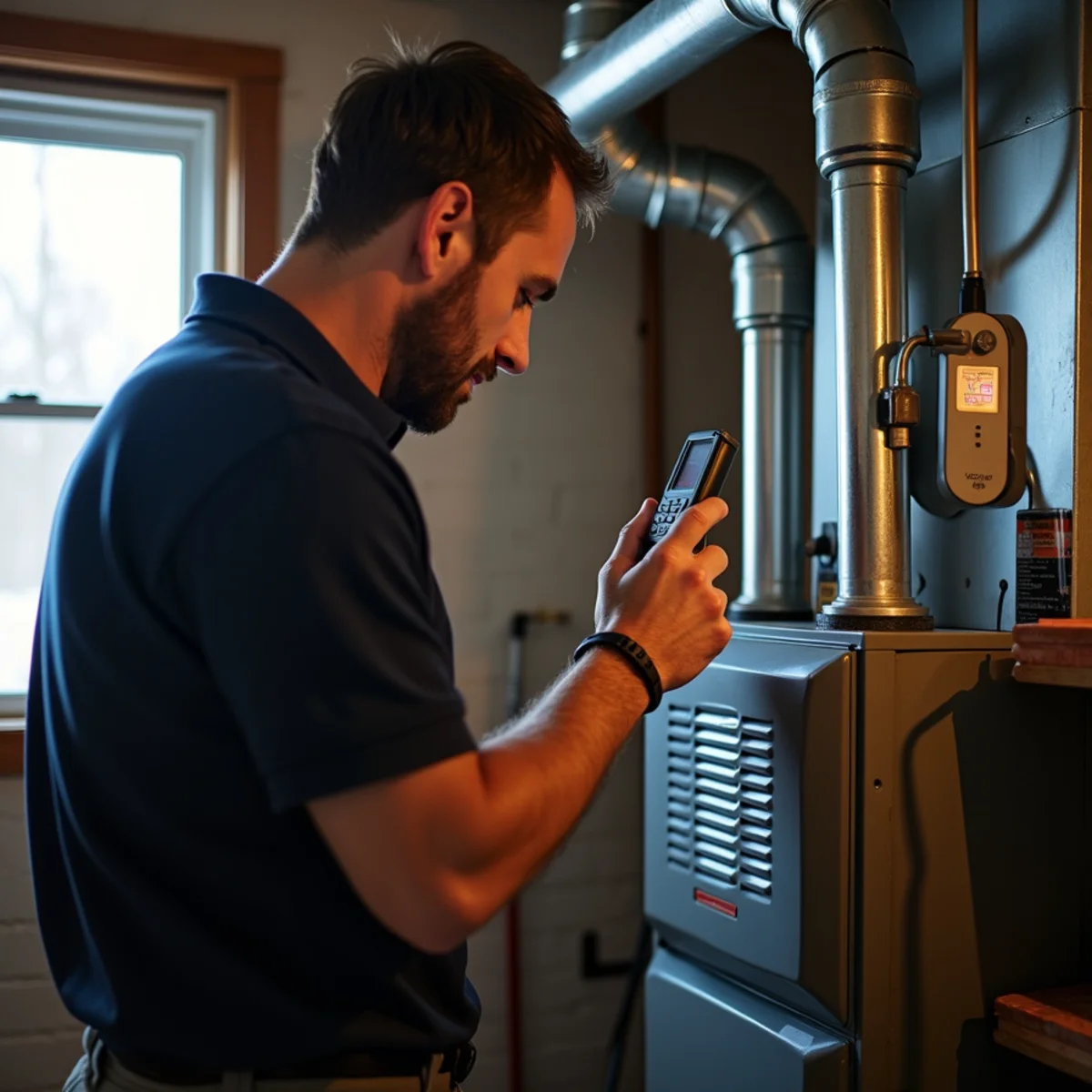
- Inside, check the furnace or air handler area for water on the floor, especially in basements.
Storm type by storm type
Power outages and flickers
Rapid on-off power cycling is hard on a compressor, because it may try to restart against high refrigerant pressure. Many thermostats and condensers include a short-cycle delay of a few minutes, but not all do. When the power comes back, set the thermostat to Off, wait half an hour for the grid to settle, then switch back to Cool.
Lightning and surges
A nearby strike can travel through utility lines or the ground and fry the parts with the most sensitive electronics: the control board, a variable-speed blower module, the thermostat or the condenser's contactor and capacitor. The telltale sign is a system that is completely dead after a storm even though the breakers are on. A whole-home or HVAC-specific surge protector is inexpensive protection worth asking about.
Hail
Hail flattens the thin aluminum fins that let the condenser release heat. Minor denting can be straightened with a fin comb during a visit. Widespread damage raises head pressure, makes the compressor work harder and shortens its life, so it deserves a proper assessment and photos for your insurer.
Flooding
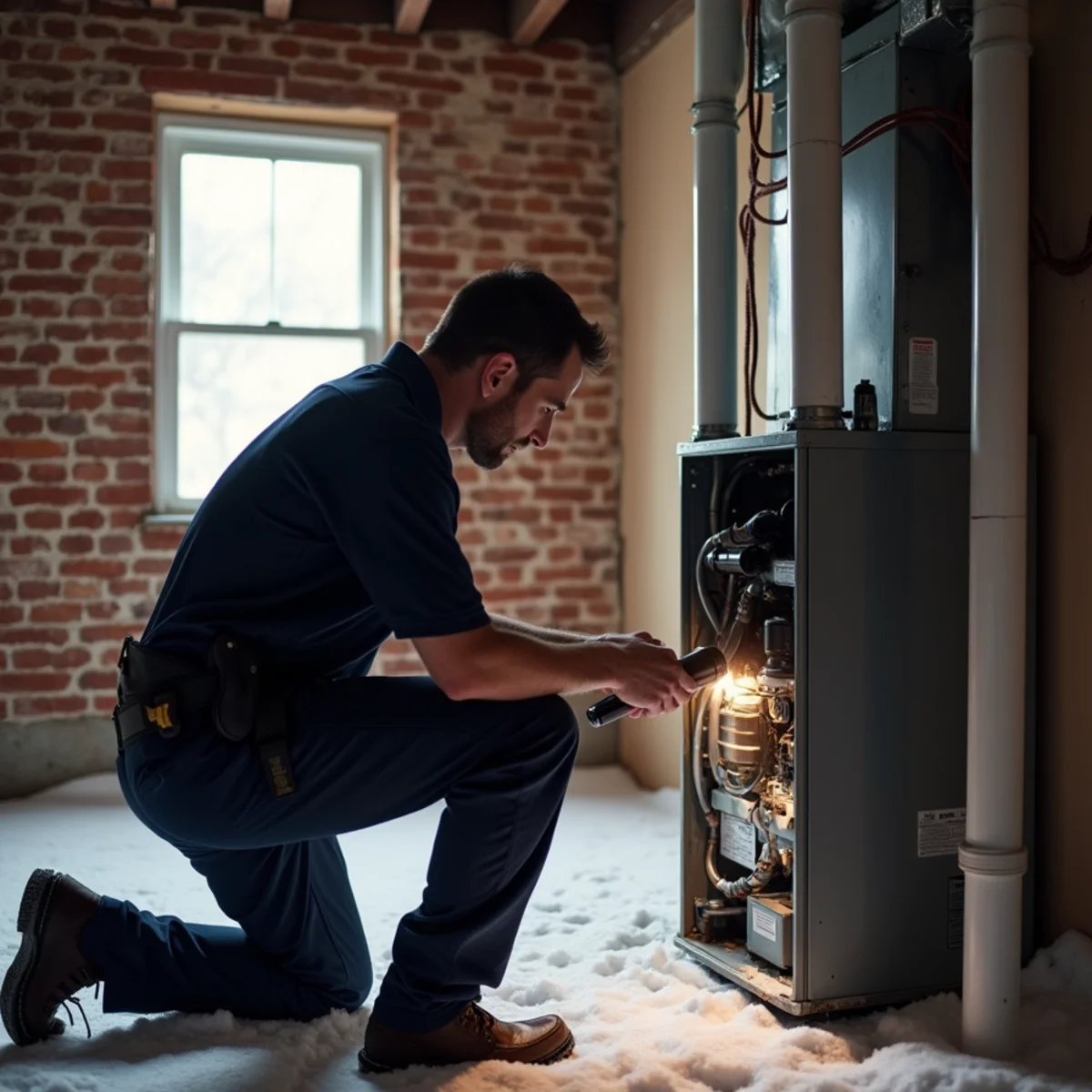
If floodwater reached the electrical components of the outdoor unit or submerged a basement furnace or air handler, do not run it. Water and silt corrode contactors, motors and circuit boards, and gas valves or controls that have been under water should be replaced rather than dried out and reused.
Safe to run, or leave it off?
| What you find | Run it? | Next step |
|---|---|---|
| Leaves and twigs only, unit level | Yes, after clearing | Watch for normal cooling |
| Light fin denting | Yes | Mention it at the next tune-up |
| Unit tipped, lines kinked or hissing | No | Call for a leak and line inspection |
| Water reached the electrical panel | No | Professional inspection before power-up |
| Dead system with breakers on | No | Likely surge damage to board or contactor |
| Burning smell or scorch marks | No | Kill power at the breaker and call |
Document before anything is repaired
If damage is more than cosmetic, take wide and close-up photos of the unit, the fins, any fallen limbs and water lines on walls before cleanup. Insurers want to see storm-related damage, not wear and tear. Our guide to homeowners insurance and HVAC storm damage explains what adjusters usually ask for.
Our storm damage HVAC repair visits include a written damage report with photos and readings, which makes the conversation with your adjuster much easier. If the system is dead after a surge, our emergency HVAC repair team can often restore cooling the same day with a replacement board or contactor.
Get it checked before the next heat spell
Storm damage rarely stays small. A hail-battered coil or a line set strained when the unit shifted may run for weeks before the compressor overheats. We regularly help homeowners in Xenia and Springboro sort out what the storm actually did. If anything on the checklist above concerns you, call our Miamisburg office and we will set up an inspection.
A before, during and after storm plan for your central air
Most advice about AC and storms starts after the damage is done. The better plan starts when the National Weather Service issues a watch, because a few minutes of preparation cut down the post-storm guesswork and give you the baseline photos an adjuster will want. The Miami Valley has earned its caution: the Memorial Day 2019 tornadoes tore through Trotwood, Huber Heights, Beavercreek and other nearby communities, and severe thunderstorms with damaging straight-line wind cross the region every warm season.
When a severe weather watch is issued
- Walk the yard and move patio furniture, trampolines, grills and trash cans away from the condenser or tie them down.
- Note any dead limbs hanging over the unit and plan to have them removed once the season calms down.
- Find the condenser disconnect box and the furnace and AC breakers now, so you are not hunting in the dark.
- Take a few dated photos of the outdoor unit, the coil and the data plate as a pre-storm baseline.
- Test the sump pump and its battery backup if the furnace or air handler sits in the basement.
- Pre-cool the house a couple of degrees so it stays comfortable if the power goes out.
While the storm is overhead
Set the thermostat to Off when lightning is close, and stay inside. Nobody should be draping tarps over a condenser with lightning in the area or a tornado warning in effect; shelter comes first. If the power blinks repeatedly, leave the system off until the storm has moved on and the lights have stayed steady. A house that was pre-cooled will usually hold a comfortable temperature for a few hours with the blinds drawn, so there is little to gain by restarting early and a compressor to lose.
Knowing who to call for which problem
| What you find | Call first | Then |
|---|---|---|
| Downed wire, damaged meter or mast | Your electric utility | An electrician if the meter base or panel is damaged |
| Gas odor anywhere on the property | 911 or your gas utility, from outside | Us, once the utility has cleared it |
| Water in the electrical panel | A licensed electrician | Us, to check the HVAC controls |
| Tree or limb resting on the condenser | Keep clear; shut off the breaker if safe | A tree service, then an HVAC inspection |
| System dead, breakers on, no visible damage | Us | Your insurer if a surge is confirmed |
| Flooded basement furnace or air handler | Keep power off | Us, for a component-by-component assessment |
Hidden damage that surfaces weeks later
Some storm damage takes time to show. Watch for these in the month after a severe storm, especially if a limb landed near the unit or the power flickered hard:
- Cooling that slowly weakens as a small leak at a stressed joint drains the charge.
- A breaker that trips on hot afternoons, pointing to a damaged capacitor or motor drawing extra current.
- A new rattle or buzz from the condenser, often a bent fan blade or a loose panel.
- Ice forming on the refrigerant lines, a common sign of low charge.
- Water where it has never been, from a condensate line knocked loose indoors.
- A thermostat that loses settings or reboots, a sign the low-voltage circuit took a hit.
Write down the date you first notice any of these, because the timeline helps connect the problem to the storm. If an inspection shows a heavily damaged coil on a system already near the end of its life, it may be time to compare repair against full HVAC system replacement rather than paying twice. Homeowners in Huber Heights, Trotwood and across Montgomery County can call our Miamisburg office for a post-storm check before the next heat spell arrives.
From our technicians
What post-storm service calls actually turn up
After a line of severe storms crosses the Miami Valley, most of our calls fall into two groups. The first is electrical: a system that is completely dead because a surge blew the small low-voltage fuse on the furnace board, welded or pitted the contactor, or took out the thermostat. Those are usually quick to find with a meter, and a surprising number turn out to be a single fuse.
The second group is physical. A limb comes down across the condenser, or saturated soil lets the pad settle and tilt, and the copper line set gets stretched where it leaves the unit. That strain can crack a brazed joint that holds for a few days, then leaks slowly. We check pressures and look for oil spots rather than trusting that it cooled fine the first afternoon.
Basement flooding is its own category. When a sump pump fails during a long power outage, the furnace or air handler can end up standing in water. We will not re-light a furnace whose gas valve or controls were submerged; those parts get replaced.
One common mistake: running the central AC off a portable generator that was never sized for a compressor's starting load. Low voltage during startup is rough on the compressor and capacitor. If you plan to use a generator, ask us or an electrician what it can safely run first.
Want a technician to take a look?
Comfort Air Solutions serves Miamisburg, Dayton and the Miami Valley — 24/7 emergency service.
- 4.8★ · 32 Google reviews
- 25+ years’ experience
- Written options before work
- Factory-Authorized Bryant® Dealer