Quick answer
Usually, yes, when the damage comes from a sudden covered event. Ohio homeowners policies generally count your AC, heat pump and furnace as part of the dwelling, so lightning, hail, wind-blown limbs, fire and theft are often covered. Age, rust and mechanical breakdown usually are not. Your own policy wording and deductible decide the outcome.
Lightning, hail and falling limbs can wreck an outdoor unit in seconds. Here is how Ohio policies usually separate sudden storm damage from wear and tear, and how a contractor report helps your claim.
Often, yes. Most standard Ohio homeowners policies treat an air conditioner or heat pump as part of the dwelling, so damage from a sudden, accidental event such as a lightning strike, hail or a tree limb crushing the condenser is usually a covered peril. What policies generally do not cover is a system that simply wore out, rusted or failed from lack of maintenance.
The details live in your specific policy, your deductible and the evidence you can show the adjuster. Below is how the process typically plays out, from the perspective of the technicians who get called out after spring and summer storms roll across the Miami Valley.
Sudden Damage vs. Wear and Tear
Insurers draw a hard line between an event and a condition. An event happens on a specific date and has an outside cause. A condition develops over years. Your HVAC claim will usually be judged on which side of that line the failure falls.
| Situation | Typical treatment | Why |
|---|---|---|
| Lightning strike or power surge during a storm | Often covered | Sudden, accidental, tied to a dated weather event |
| Hail flattening condenser coils | Often covered | Physical damage from a named peril |
| Tree or limb falls on the outdoor unit | Often covered | Impact from wind or storm |
| Flood water submerging equipment | Usually excluded from standard policies | Flood typically requires separate coverage |
| Compressor fails from age | Usually excluded | Mechanical breakdown and wear and tear |
| Corroded coil or rusted cabinet | Usually excluded | Gradual deterioration |
Where lightning claims get complicated
A direct strike is rare. What we see far more often is a nearby strike that sends a surge through the power lines, taking out a control board, contactor, capacitor or the compressor itself. There may be no scorch marks at all. That is exactly why an adjuster will want a qualified technician to explain what failed and why the failure pattern fits an electrical surge rather than old age.
Equipment-breakdown endorsements
Some carriers offer an equipment-breakdown or service-line endorsement that can extend coverage to mechanical and electrical failures that a standard policy excludes. It is an add-on, not a default. If you are unsure whether you have one, your declarations page or your agent can tell you.
Replacement cost vs. actual cash value
Two policies can both cover a hail-damaged condenser and still pay very different amounts. A replacement-cost policy is generally written to pay what it takes to put in comparable new equipment, while an actual-cash-value policy typically subtracts depreciation for the age of the unit. On a 15-year-old air conditioner, that depreciation can be a large share of the bill. Ask your agent which basis your dwelling coverage uses before the storm, not after.
Other events homeowners ask us about
- Copper theft from the condenser. Cut line sets are a crime, not wear; many carriers cover theft once a police report is filed.
- Fire or smoke in the mechanical room. A fire-damaged furnace usually falls under dwelling coverage with the rest of the structure.
- Frozen, burst water lines near the furnace. Coverage often hinges on whether the home was kept heated.
- Sewer backup into a basement furnace. This is commonly its own endorsement, separate from flood insurance.
What to Do Right After the Storm
- Stay safe first. Keep clear of downed lines and any unit sitting in standing water. If you smell gas, get out first and phone 911 or the gas utility from a neighbor's yard.
- Shut the system off at the thermostat and, if it is safe to reach, at the outdoor disconnect. Running a damaged compressor can turn a repairable problem into a total loss.
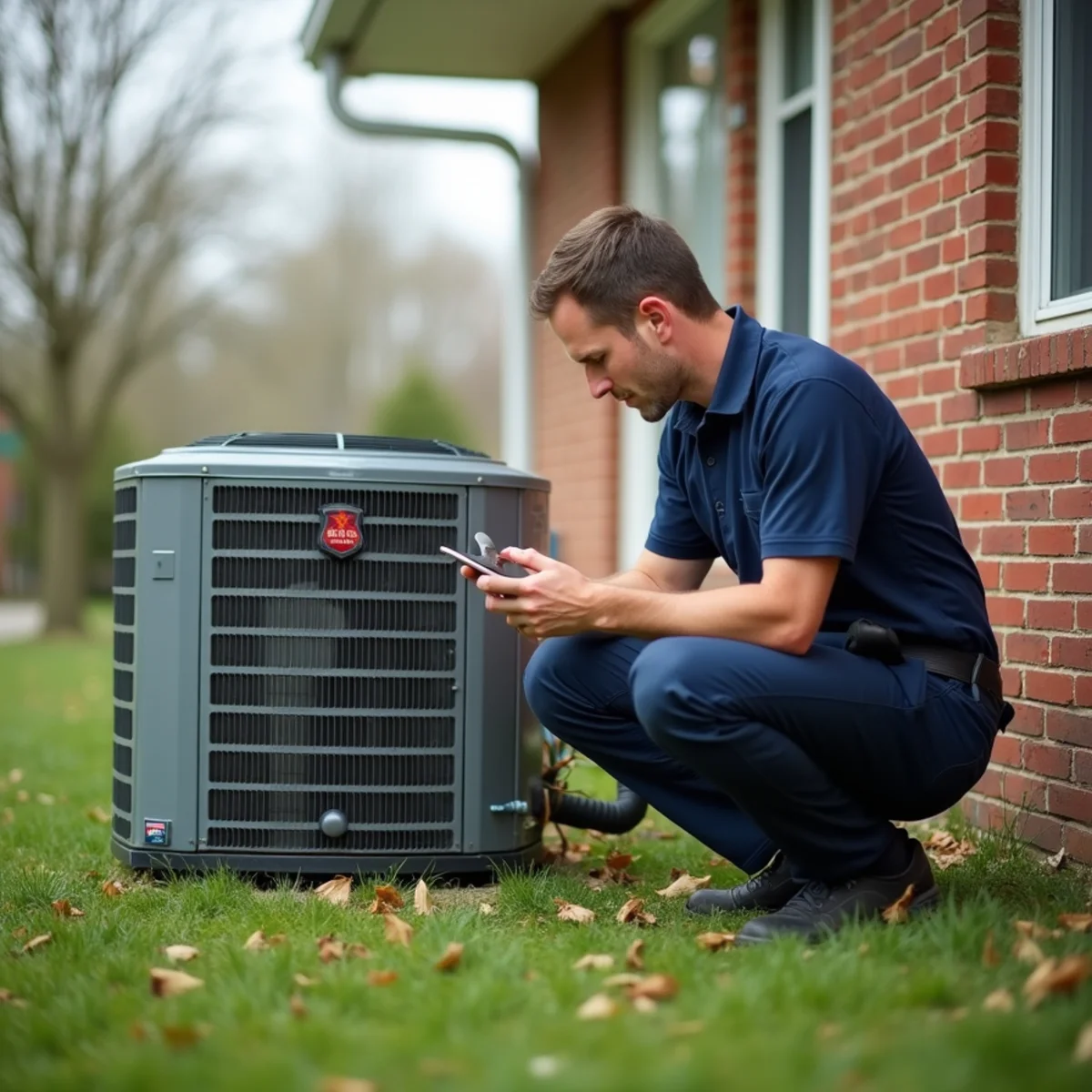
- Photograph everything before anything is moved: the unit from all four sides, close-ups of dented fins, the fallen limb, the breaker panel and any tripped breakers.
- Write down the date and time of the storm and when the system stopped working. Local weather reports help establish the event.
- Call your carrier to open a claim, then schedule a professional inspection so the adjuster has a written assessment to review.
Why a Contractor Report Carries Weight
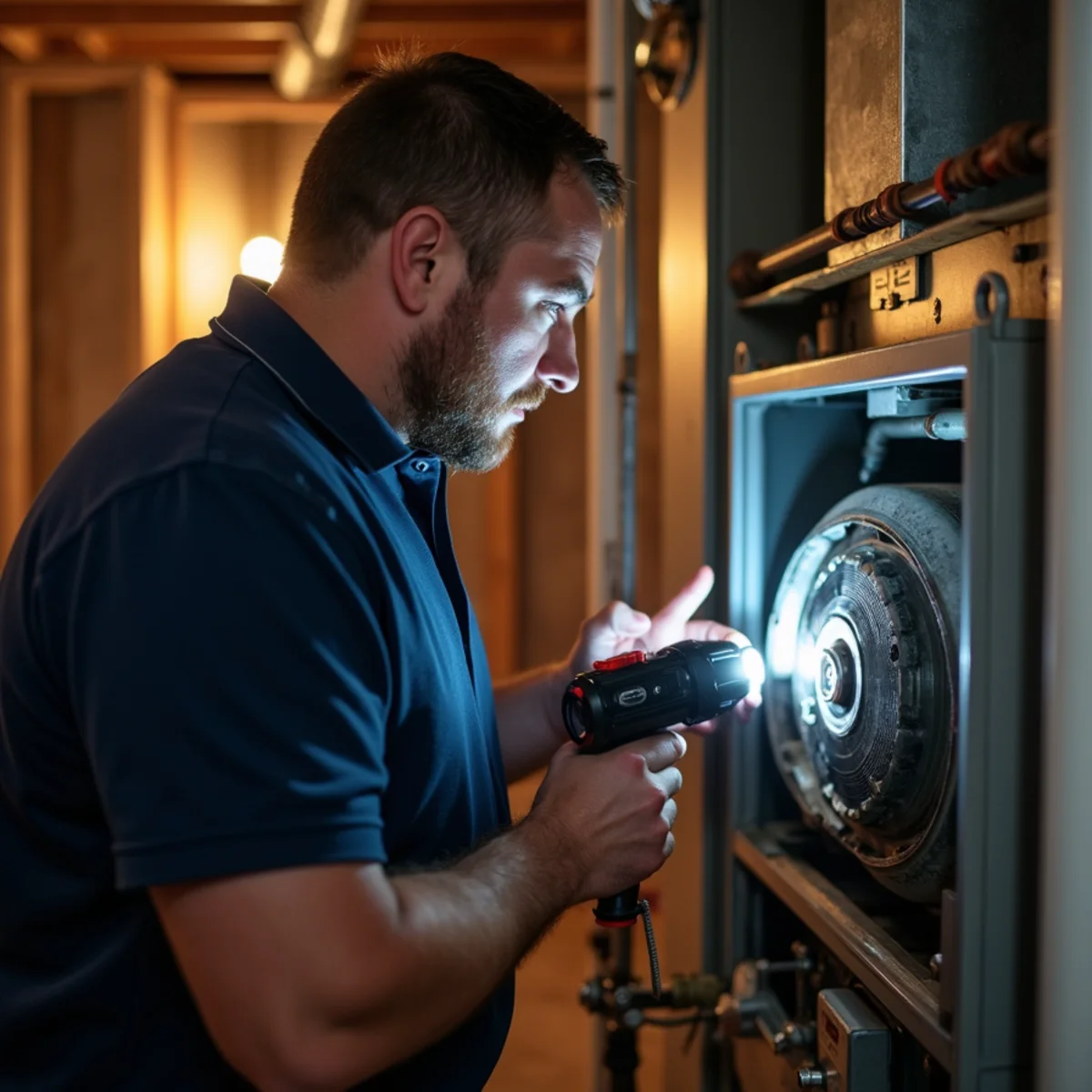
Adjusters are generalists. A clear report from an HVAC technician gives them the technical story they need. When we do a storm damage HVAC inspection, the written findings typically include:
- Make, model, serial number and approximate age of each component
- Which parts failed, with meter readings from capacitors, contactors, windings and control boards
- Photos of physical damage such as crushed coils, punctured refrigerant lines or impact dents
- Whether the failure pattern is consistent with a surge, hail or impact rather than gradual wear
- Whether the unit can be repaired or should be replaced, and why
That last point matters. If a strike damages the outdoor unit on an older split system, replacing the condenser alone may not be practical because the new unit has to be matched to the indoor coil and refrigerant type. In those cases we explain the options for a full HVAC system replacement so you and your adjuster can compare apples to apples.
Working With the Adjuster
Many homeowners find it helpful to have the technician's report in hand before the adjuster visits, or to ask whether the technician can speak with the adjuster directly. Keep damaged parts until the claim is settled; adjusters sometimes want to see them.
If your policy has a deductible that is close to the repair cost, filing may not make sense. That is a financial decision between you and your agent, and a contractor's written estimate helps you make it with real information instead of guesses.
Storm Season Across Montgomery County
Spring and early summer thunderstorms in Southwest Ohio bring hail, straight-line winds and plenty of lightning. Homes with mature trees over the condenser pad, which describes a lot of established neighborhoods across Montgomery County, are the ones we see limb damage on most. A whole-home surge protector and keeping branches trimmed back from the unit are two inexpensive ways to lower the odds of a claim in the first place.
Get a Clear Assessment Before You File
The strongest claims start with good documentation and an honest technical opinion. Give our office a call after the storm passes, and we will inspect the equipment, put our findings in writing and walk you through repair or replacement options in plain English.
Homeowners Policy, Home Warranty or Breakdown Endorsement: Which One Pays
Ohio homeowners often have two or three overlapping products and are not sure which to call. They are built for different problems. A homeowners policy responds to sudden outside events. A home warranty is a service contract for things that wear out. An equipment-breakdown endorsement sits in between and responds to internal electrical or mechanical failure. Knowing which one fits the failure saves a wasted claim and a second service visit.
| Product | Built to respond to | Who usually picks the contractor | What the technician documents |
|---|---|---|---|
| Standard homeowners policy (dwelling coverage) | Lightning, hail, wind, falling limbs, fire, theft | You, with the adjuster reviewing the estimate | Cause of damage, storm date, photos, repair vs replace reasoning |
| Equipment-breakdown endorsement | Sudden internal failure such as a shorted motor or failed board, even without a storm | You, subject to carrier approval | Failed component, test readings, whether the failure was sudden |
| Home warranty contract | Normal wear and age-related breakdown of covered parts | Usually the warranty company dispatches a contractor | Diagnosis the warranty company asks for, parts covered or excluded |
| Flood policy (separate purchase) | Rising surface water that submerges equipment | You, with a flood adjuster | Water line height, electrical and gas-valve exposure |
We also take dispatches from home-warranty companies, so we see both sides of this. When a condenser fails the week after a thunderstorm, the honest answer is sometimes that the failure looks like age, and sometimes that it looks like a surge. Our written findings say which, so you can send the claim to the right place first.
The claim file worth keeping
Adjusters work from paper. A tidy folder, even a phone album plus a notes file, makes the conversation shorter. Before and after any storm-related visit, gather:
- The declarations page showing your deductible, whether it is a flat amount or a wind/hail percentage, and whether dwelling coverage pays replacement cost or actual cash value.
- Dated photos and a short video of the outdoor unit, the fallen limb or hail on the ground, and the indoor equipment.
- Installation paperwork or an old invoice that shows the age of the system, since age drives depreciation.
- Maintenance records. Proof of regular tune-ups helps counter a wear-and-tear argument.
- Our written inspection, readings and any failed parts, bagged and labeled.
- Receipts for temporary measures such as a space heater or a tarp, which some policies reimburse under mitigation.
- A log of every call with the carrier: date, name and what was said.
When the claim stalls, comes in low or is denied
A low offer is often a scope disagreement, not bad faith. The adjuster may have priced a condenser alone when the refrigerant change or coil mismatch means the indoor section has to be replaced too. In that case the fix is technical: a written explanation of why a partial swap will not work, which is something we provide as part of storm damage HVAC repair. If the dispute is about the dollar amount rather than coverage, many policies include an appraisal clause. If you believe the carrier is ignoring the policy itself, the Ohio Department of Insurance handles consumer complaints.
Mistakes that quietly weaken a storm claim
- Resetting a tripped breaker over and over, which can finish off a compressor and blur the date of loss.
- Hauling the damaged unit away before the adjuster or a technician has seen it.
- Straightening fins or taping a line before taking photos.
- Letting months pass because the house still feels cool enough, then reporting hail damage after the notice window has tightened.
- Hiring a storm-chasing crew that knocks on doors after a hailstorm and cannot be reached when the claim needs a follow-up.
- Assuming the furnace is fine after a surge. The same spike that hit the condenser can damage the furnace board, so check heat before fall; our post on whether your AC is safe to run after a storm covers the startup checks.
Older neighborhoods in Dayton with big silver maples hanging over the condenser pad are where we find most limb damage after a line of spring storms. Trimming branches back and adding a whole-home surge device will not change your policy, but they make it less likely you ever have to use it.
From our technicians
What our technicians see on storm-damage calls
After a line of storms crosses the Miami Valley, the calls we get are rarely a condenser split in half by a tree. Far more often the system simply will not start the next morning. When we open the panel we find a contactor with pitted, welded points, a run capacitor that tests well below its rated microfarads, or a furnace control board with a burned trace near the transformer. Those are all consistent with a surge, but a weak capacitor is also a normal wear item, so we write down readings, photograph the parts and note what else in the house lost power or electronics that night.
Hail is easier to show and harder to judge. Flattened fins look dramatic, yet a coil can sometimes be combed and still move air. We measure the pressures and temperature split, not just the appearance, and we tell you honestly if the unit still performs. The mistake we see most is a homeowner who keeps resetting a tripped breaker for days before calling anyone. That can finish off a compressor that was repairable and muddies the timeline an adjuster relies on. Shut it off, take photos and call. We are HVAC technicians, not insurance advisors, so we report what failed and leave the coverage decision to your carrier.
Want a technician to take a look?
Comfort Air Solutions serves Miamisburg, Dayton and the Miami Valley — 24/7 emergency service.
- 4.8★ · 32 Google reviews
- 25+ years’ experience
- Written options before work
- Factory-Authorized Bryant® Dealer